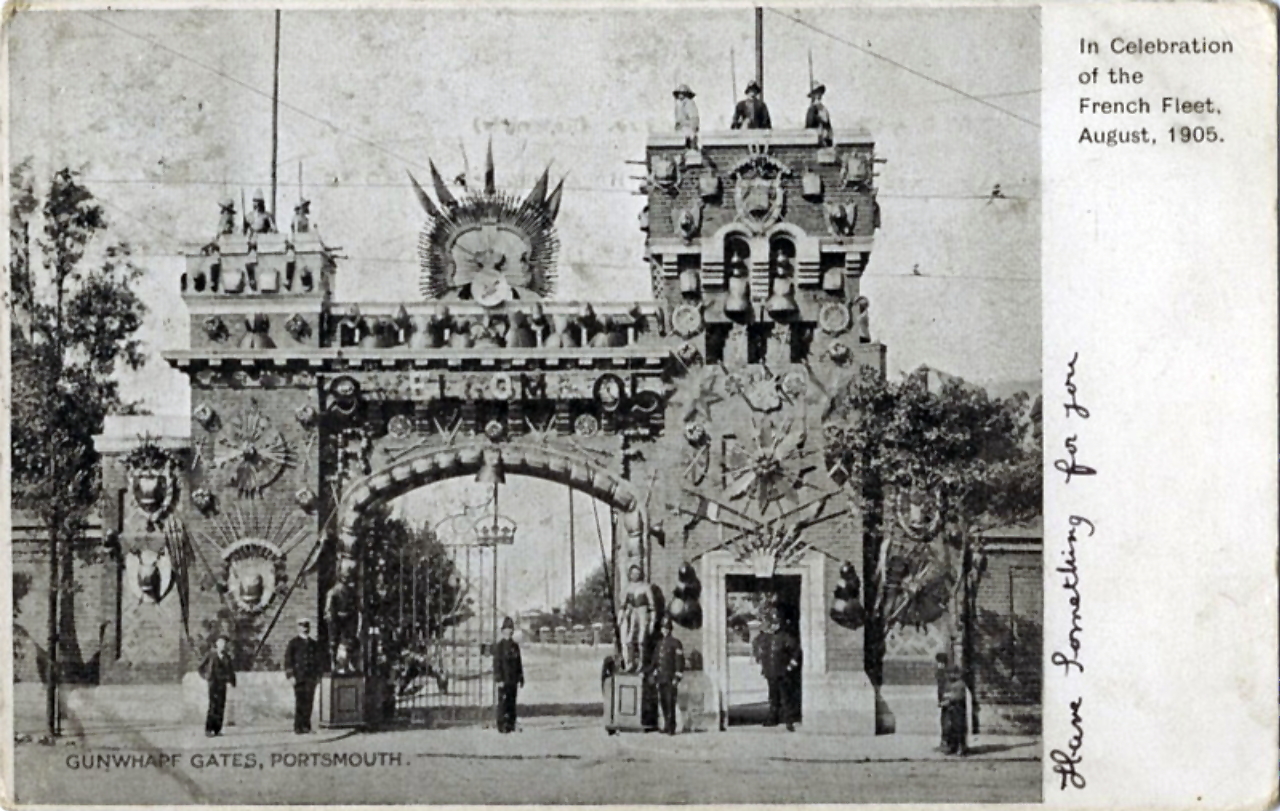
Left: Gunwharf's Main Gate decorated "In celebration of the French Fleet August 1905"
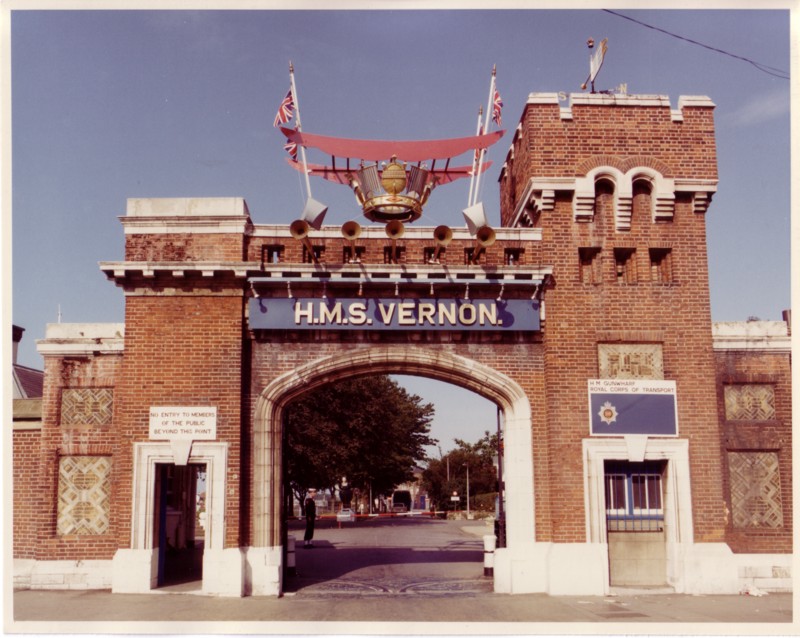
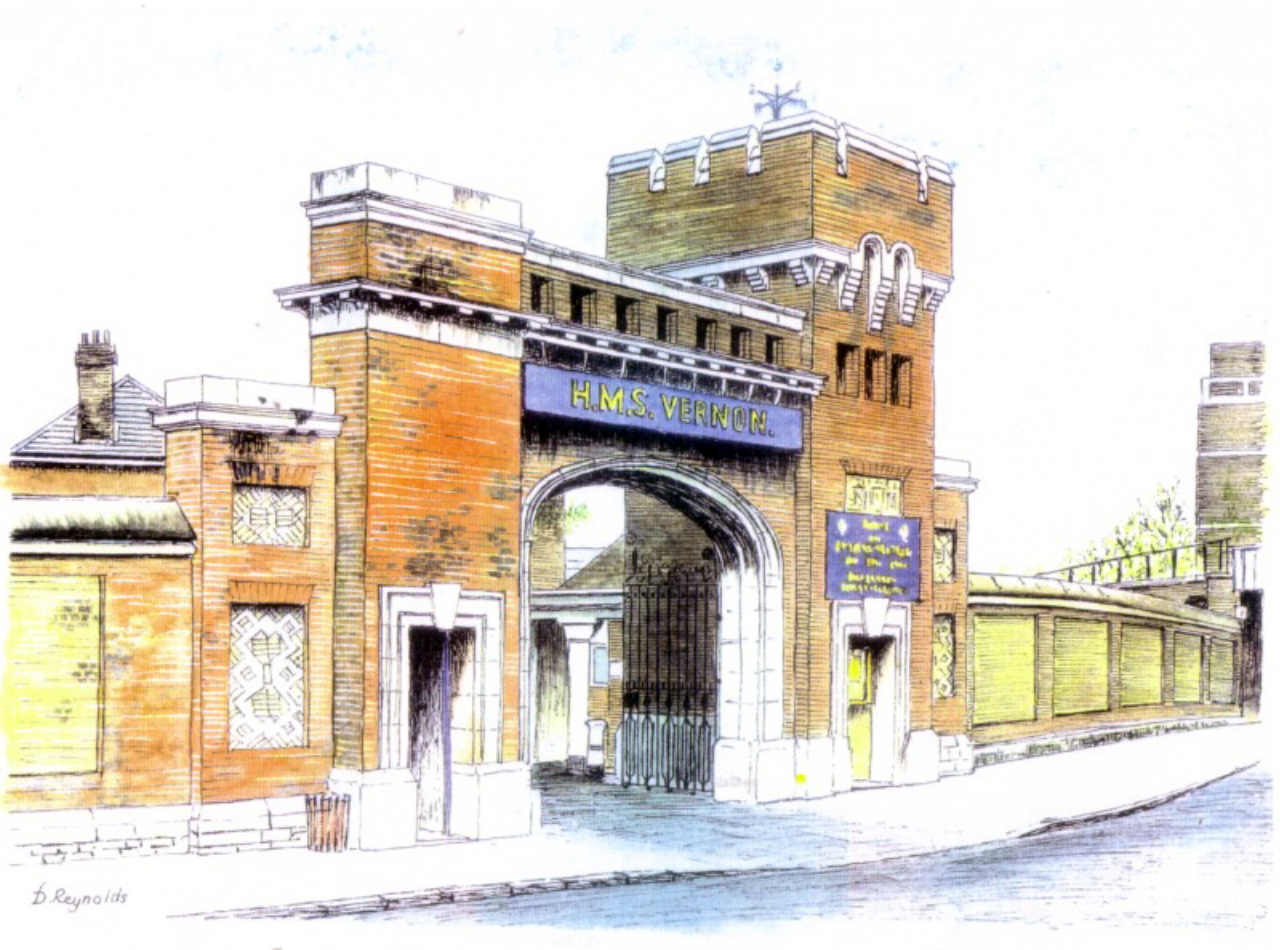
Right: HMS Vernon's Main Gate by B. Reynolds

HMS Vernon before the excavators came
by Rob Hoole
Left: Gunwharf's Main Gate decorated "In celebration of the French Fleet August 1905"
Right:
HMS Vernon's Main Gate by B.
Reynolds
The last of four ships to bear the name HMS Vernon was a fourth rate 50-gun 'Symondite' frigate that saw active service in home waters, the Americas and the East Indies between 1832 and 1848. She was then laid up in Chatham Dockyard until emerging in 1867 for use as a floating coaling jetty.
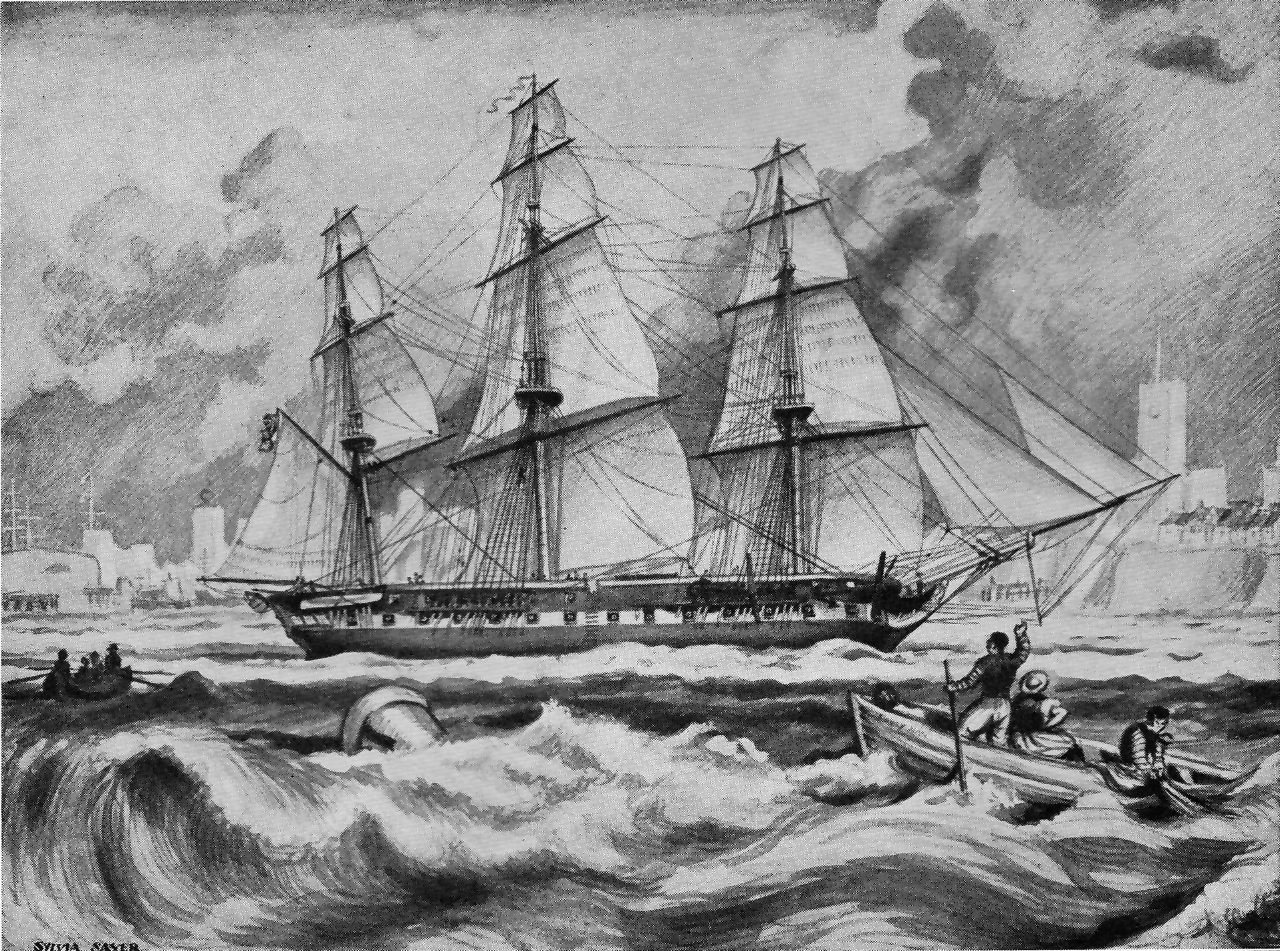
The 50-gun fourth-rate frigate HMS Vernon designed by Sir William
Symonds
and launched at Woolwich on May Day in 1832
She was actually named after the Hon George Vernon, a friend of Capt William Symonds who had designed her, but her name became synonymous with one of his ancestors, Admiral Edward Vernon (1684-1757) nicknamed 'Old Grog'. On 22 Nov 1739, he achieved fame by commanding a squadron of six ships which captured the Central American coastal fortress of Portobello from the Spanish. Although he suffered a later defeat at Cartagena, he was elected to Parliament on the basis of his previous success. He was known as ‘Old Grog,’ reputedly because of his penchant for wearing a cloak made of grogram (from the French ‘gros grain’), a coarse fabric of silk or mohair and wool. In 1740, he had the sailors’ neat rum ration diluted with water, a mixture known ever afterwards as ‘grog.’
.jpg)
Admiral Edward Vernon (Old Grog)
(12 November 1684 – 30 October 1757)
Successive HMS Vernons adopted the same motto as the town of Vernon-sur-Seine in France where the Vernon family had originated: "Vernon Semper Viret". The literal translation of this is "Vernon Forever Green" but a more realistic translation would be "Vernon Will Always Flourish".
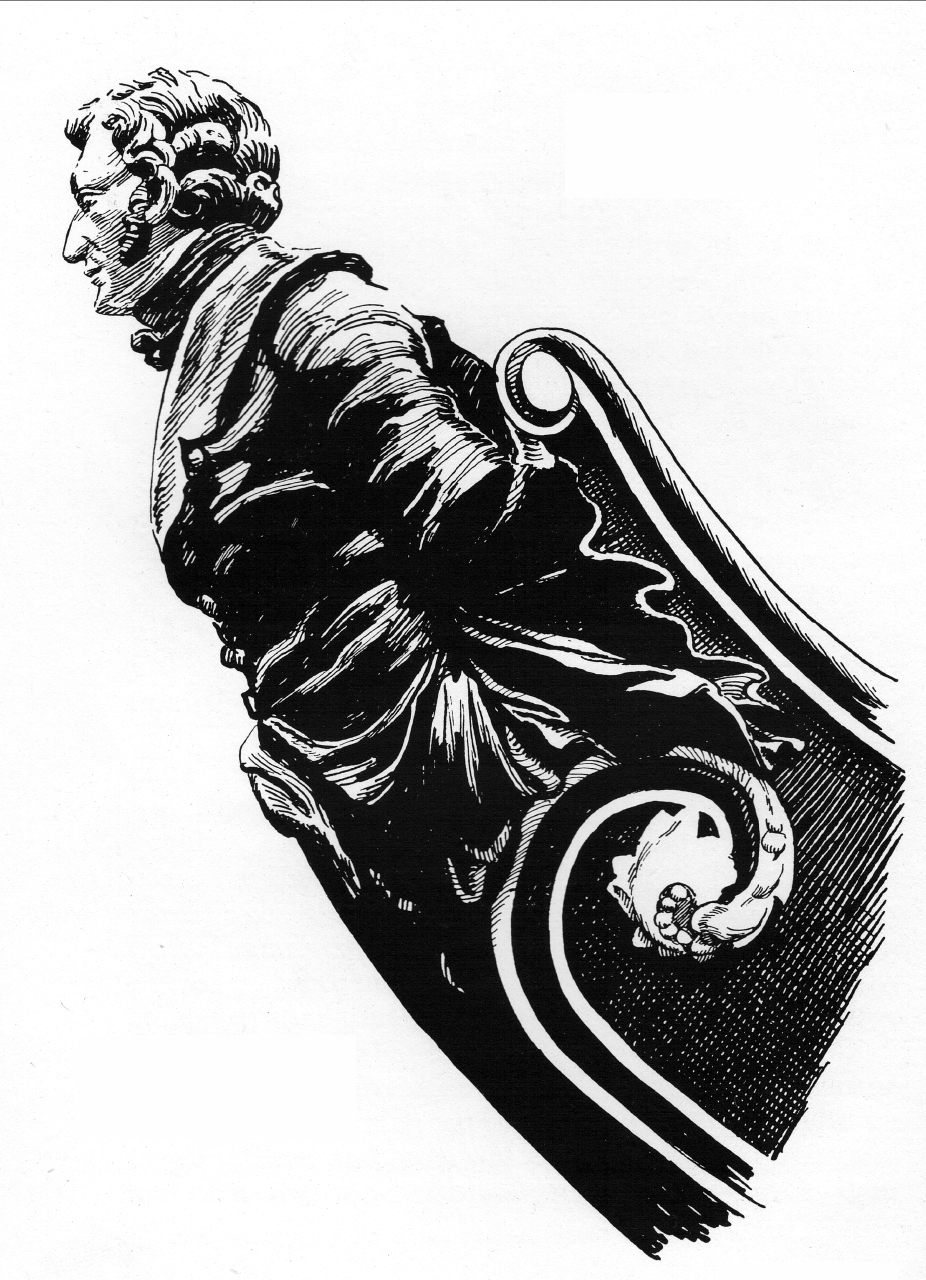
Figurehead of the fourth HMS Vernon
In 1872 the fourth HMS Vernon was given a new lease of life as a hulk anchored in Fountain Lake at Portsmouth. Together with the 104 gun Excellent (formerly Queen Charlotte) and the 84 gun Calcutta, she helped constitute HMS Excellent, the Royal Navy's floating Gunnery School but specifically for torpedo and mining training. From 1874 to 1923 Vesuvius, a gunboat of 250 tons, became Vernon's Whitehead Experimental Tender for the conduct of torpedo trials.
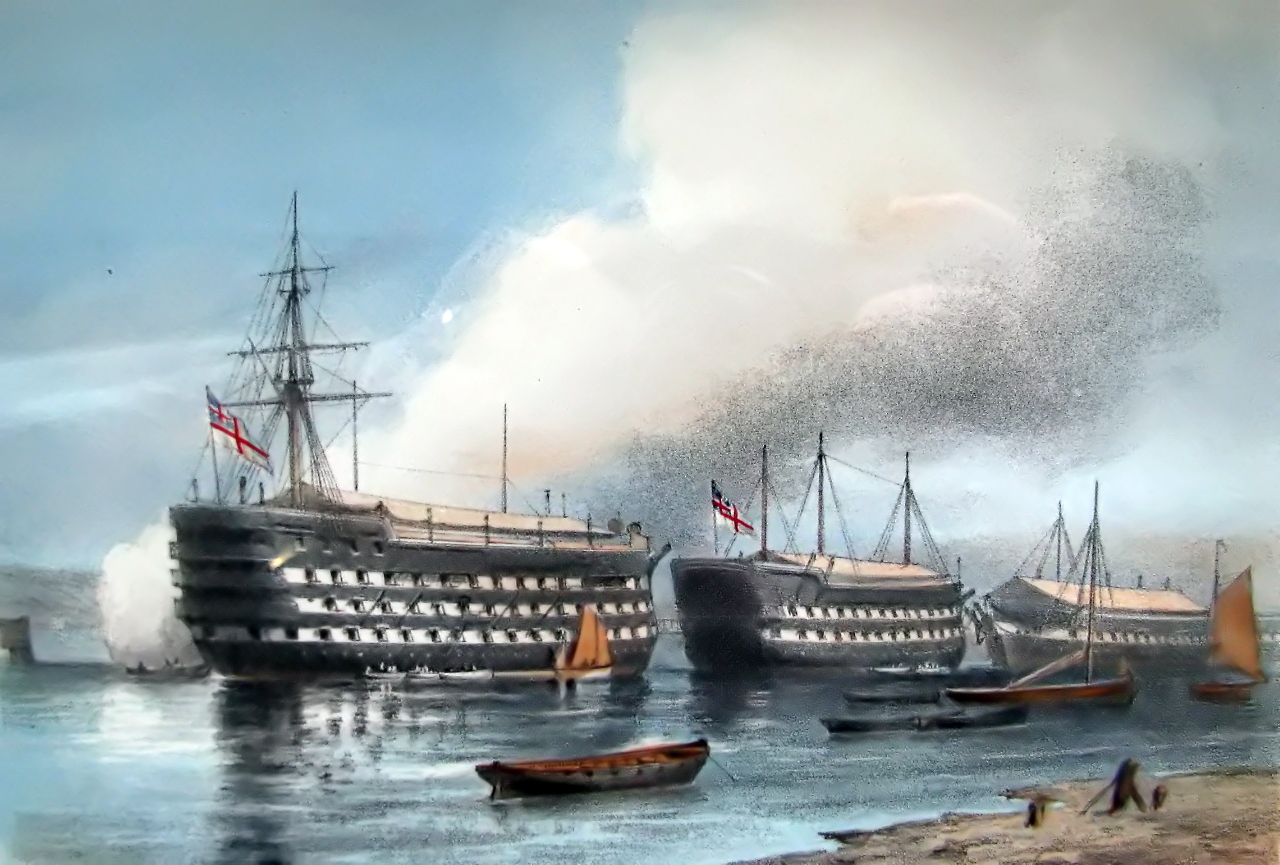
Print of the 104 gun Excellent (formerly Queen Charlotte), the 84 gun
Calcutta
and the 50 gun Vernon circa 1872. Collectively, they formed HMS
Excellent,
the Royal Navy's floating Gunnery School
On 26 April 1876 the hulk of Vernon together with those of the former 26 gun screw frigate Ariadne (providing accommodation) and the lighter Florence Nightingale were commissioned as HMS Vernon to become the home of the Royal Navy's Torpedo Branch at Portsmouth, independent of HMS Excellent. The hulk of the fourth rate frigate Actaeon was added in October 1879 and used as a workshop.
In January 1886 the former two-deck ship-of-the-line Donegal arrived and assumed the original Vernon's role as a more spacious torpedo school ship. Donegal was renamed Vernon (VERNON I). The original Vernon was renamed Actaeon (VERNON IV) and replaced the original Actaeon as a practical workshop. The original Actaeon was then scrapped.
On 23 April 1895, the hulks of Vernon (formerly Donegal), Ariadne and Actaeon (formerly Vernon) were moved from Fountain Lake to Portchester Creek in Portsmouth Harbour.
In 1903, the accommodation hulk Ariadne was replaced with the hulk of the old 121 gun three-decker Marlborough which became VERNON II. She was connected by bridges to Actaeon (VERNON IV) and the old Donegal, now Vernon (VERNON I).
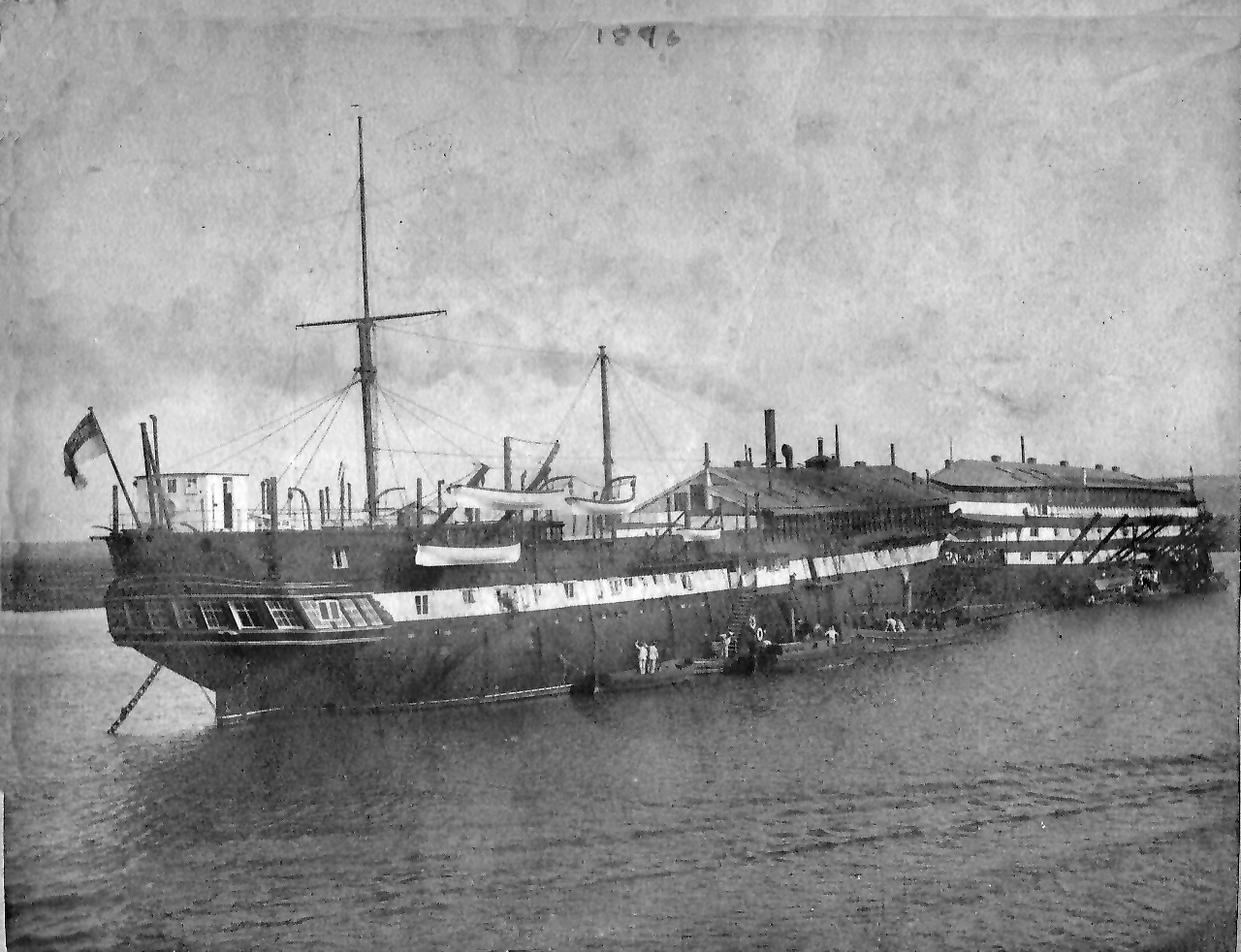
HMS Vernon in 1896 - Vernon (renamed Actaeon (VERNON IV)) and Donegal
(VERNON I)
In 1904 the pioneer ironclad Warrior (now on show in Portsmouth as HMS Warrior 1860) arrived as a floating workshop, power plant and wireless telegraphy school and became VERNON III.

Above and below: HMS Vernon comprising Marlborough (VERNON II),
Warrior (VERNON III)
and Donegal (VERNON I) in Portchester Creek

%20port%20side.jpg)
Donegal (VERNON I)
%20stern.jpg)
Donegal (VERNON I)
%20port%20bow.jpg)
%20port%20quarter.jpg)
Donegal (VERNON I)
%20starboard%20side.jpg)
Marlborough (VERNON II) starboard side
%20stern.jpg)
Marlborough (Vernon II) stern
%20starboard%20bow.jpg)
Marlborough (VERNON II) starboard bow
%20starboard%20quarter%201915.jpg)
Marlborough (VERNON II) starboard quarter
%20starboard%20side.jpg)
Above and below: Warrior (VERNON III)
%20starboard%20quarter.jpg)
For conformity, Actaeon (the original Vernon) became VERNON IV. She was moored separately abreast VERNON II, on the other side of Portchester Creek, and used as an instructional ship and floating workshop.
%20starboard%20bow.jpg)
%20starboard%20quarter.jpg)
Actaeon (VERNON IV), the former 50 gun HMS Vernon, in 1904
In 1904, Ariadne (ex-VERNON II) was sent to Sheerness where, confusingly, she was renamed Actaeon on 6 June 1905 or 1906 (depending on source) and became the nucleus of a new torpedo school. She was eventually sold on 11 December 1922.
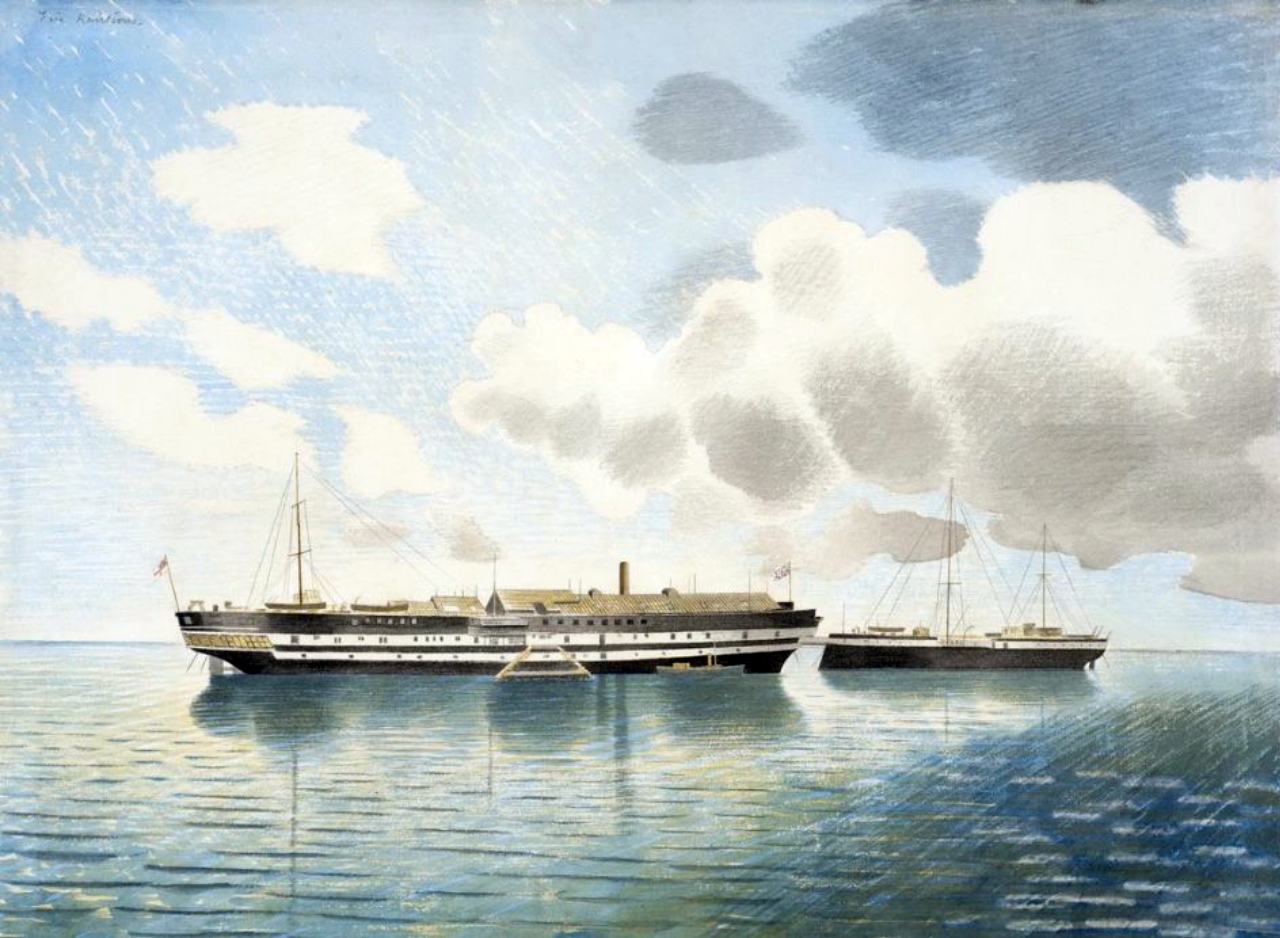
HMS Actaeon, the former HMS Ariadne (VERNON II),
as painted by Eric Ravilious, 1942
(Cdr Harold West DSC* RN)
In 1916, the second class cruiser Forte was moored alongside Warrior (VERNON III) for use as offices and extra living accommodation. Between 1916 and 1923, various submarines and a barrage vessel were attached to the School to assist in providing electrical power.
During the First World War, work at HMS Vernon concentrated on torpedo trials and training and the research and development of anti-submarine devices and training in their use as well as mines and ships' electrics.
On 1 October 1923, HMS Vernon (or ‘The Vernon’ as it came to be known) was established ashore at Portsmouth on the site of the old Gunwharf (now the development known as Gunwharf Quays) and Mining, Whitehead [Torpedo] and Electrical departments were formed. The original 50 gun frigate HMS Vernon, since called Actaeon (VERNON IV), was sold and towed to Castle's shipbreaking Yard at Woolwich to be scrapped. Similarly Marlborough (VERNON II) was sold for scrap in October 1924 but capsized off Osea Island in the Blackwater estuary on 28 November 1924 while being towed to the shipbreakers. Donegal (VERNON I) was sold on 18 May 1925 to Pounds shipbreakers in Portsmouth.
%20on%20way%20to%20breakers%2012%20Oct%201923.jpg)
The original names of the Vernon hulks were adopted for buildings in the shore base.

HMS Vernon ship's figurehead
at HMS Vernon in 1957
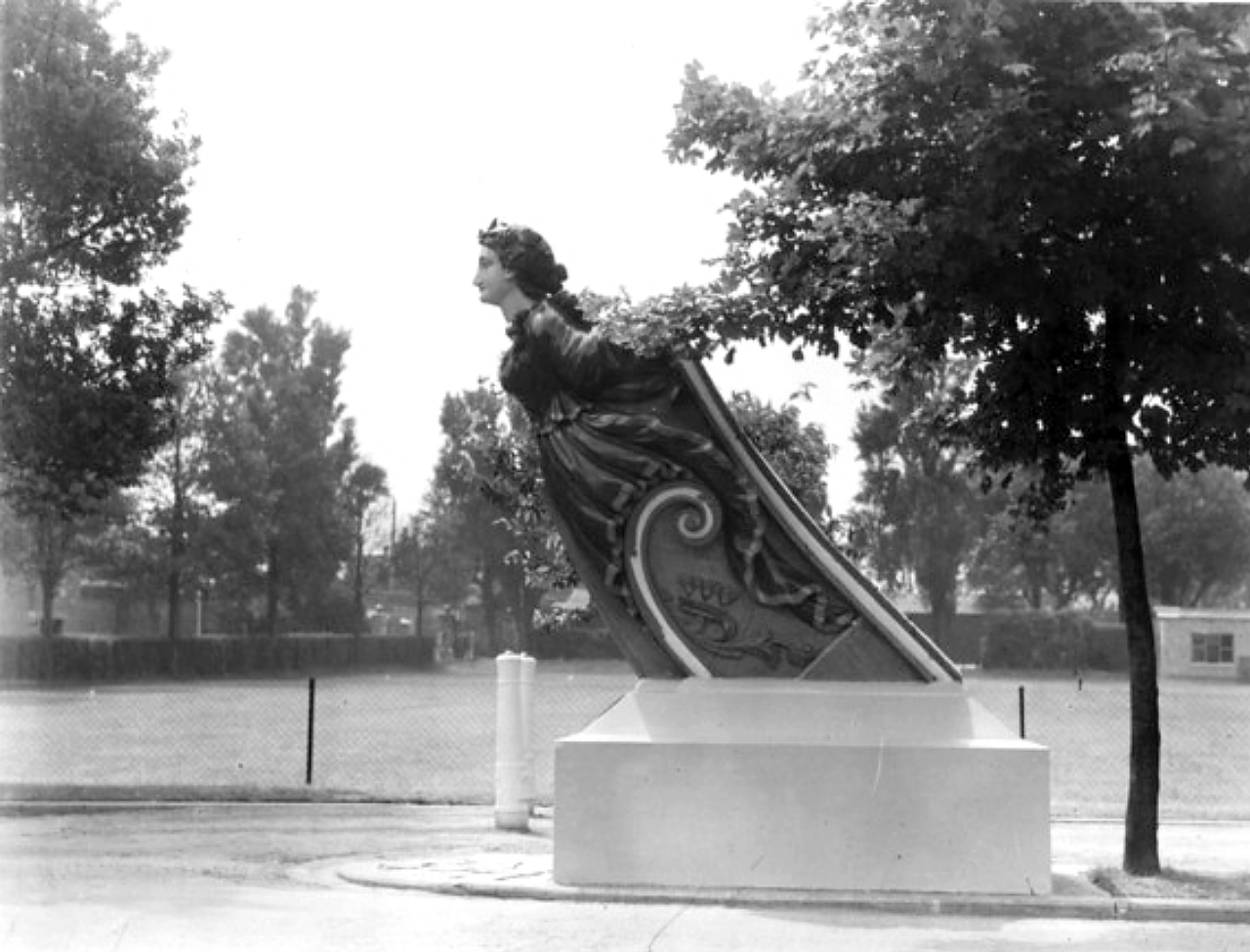
HMS Ariadne's figurehead at HMS Vernon in the 1980s
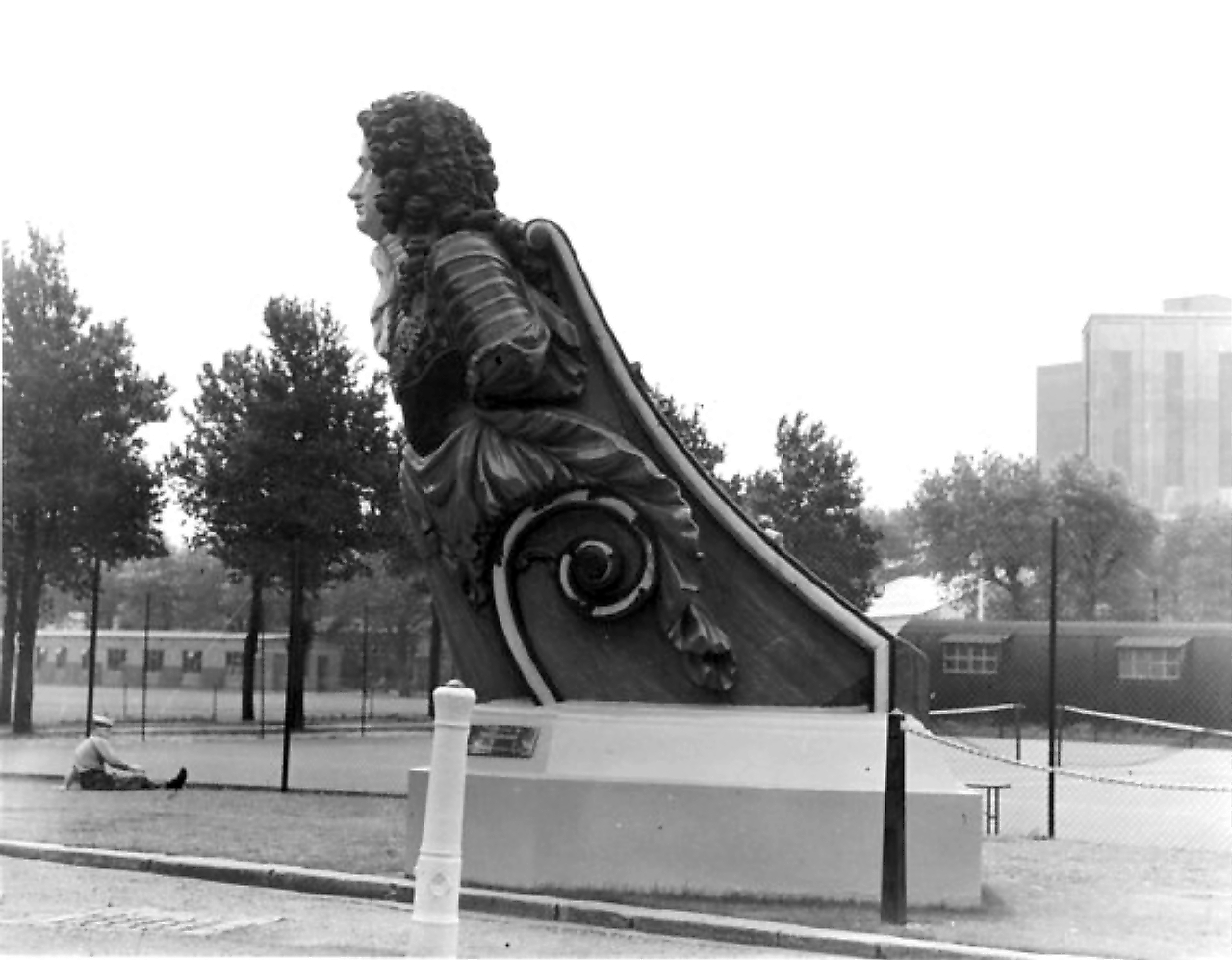
HMS Marlborough figurehead at HMS Vernon in the 1980s
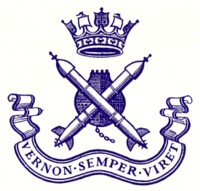
Original
HMS Vernon Ship's Badge
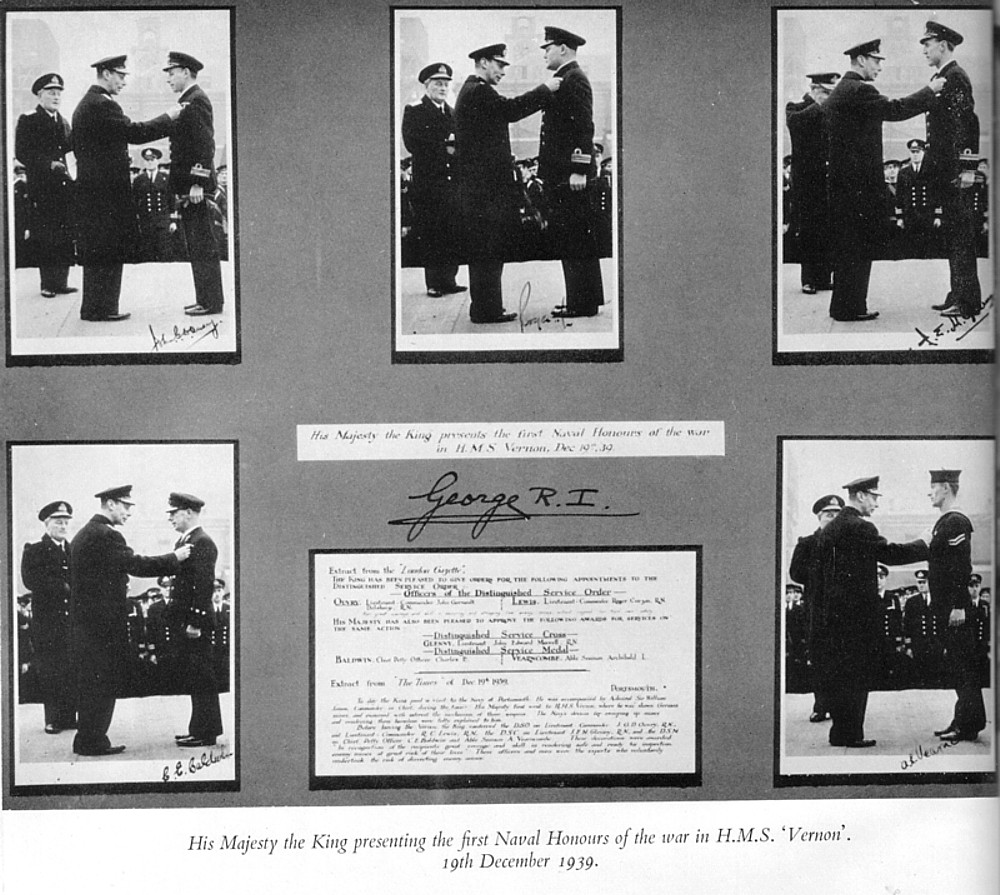
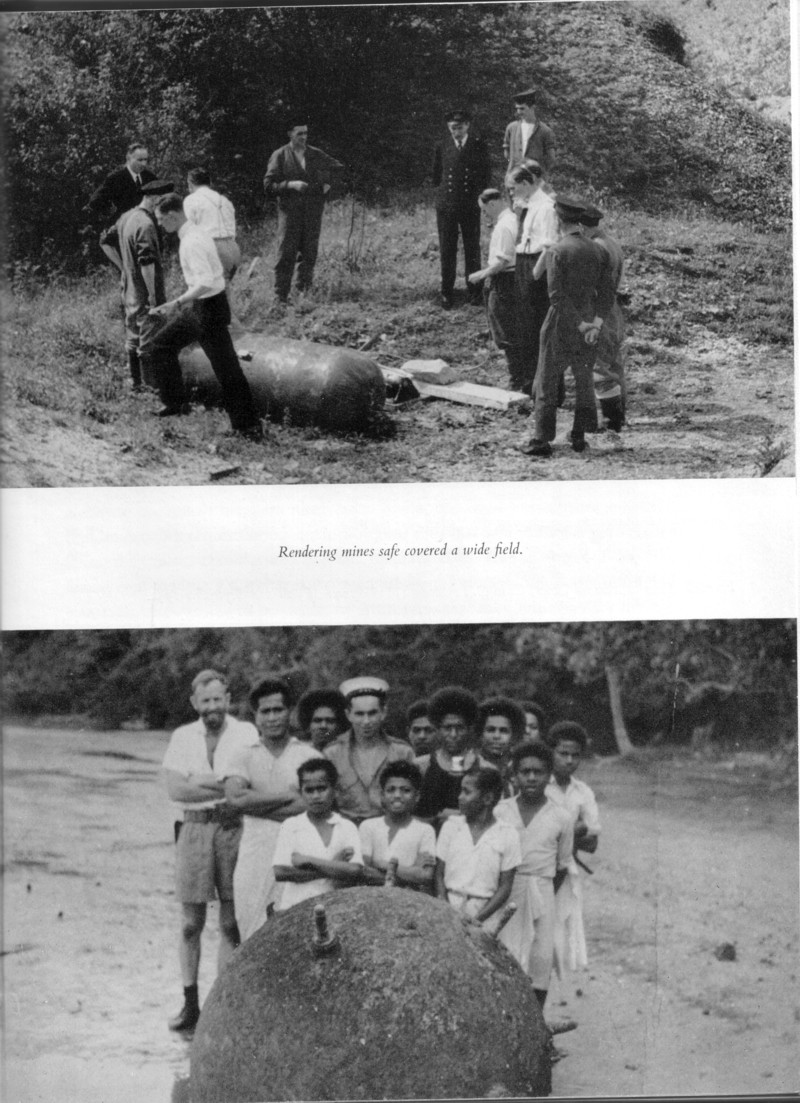
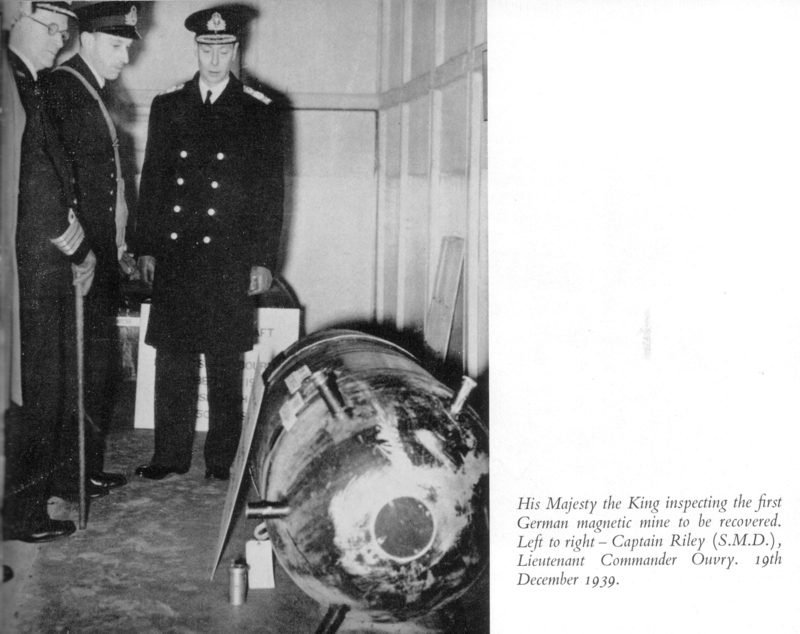
During the Second World War, HMS Vernon became responsible for mine disposal and mine countermeasures. Her officers and scientific staff achieved several coups involving the capture of mines and the development of countermeasures. One of the earliest of these was the rendering safe and recovery of the first German magnetic mine (Type GA) at Shoeburyness on 23 November 1939. For this deed, Cdr John Ouvry was decorated with the DSO by King George VI at a ceremony on HMS Vernon’s parade ground on 19 December 1939. Others decorated at the same time for this, and other tasks where mines were rendered safe for recovery and examination, were Lt Cdr Roger Lewis (DSO), Lt J E M Glenny (DSC), CPO C E Baldwin (DSM) and AB A L Vearncombe (DSM). Of particular note, these were the first Royal Naval decorations of the war.
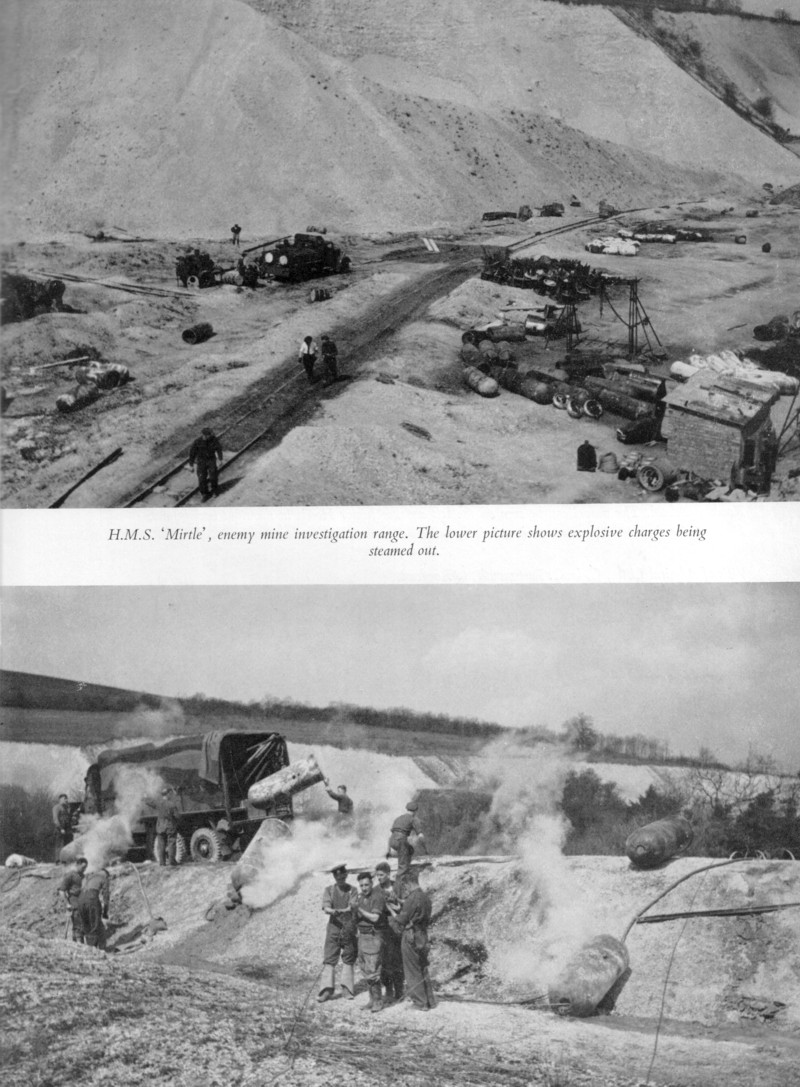
In June 1940, the first attempt to render safe a ground mine by divers was made in Poole Harbour, Dorset. A diving unit from HMS Excellent, supported by divers trained in Rendering Mines Safe (RMS) techniques from HMS Vernon, successfully removed the fuze from a Type GC mine underwater although the mine exploded as it was towed inshore. For his central role in this task, Able Seaman Diver R G Tawn was subsequently awarded the DSM. On discovering the skill of HMS Vernon’s mine technicians, the Germans placed booby traps in some mines. One was fitted with a small explosive charge that detonated when the mine was stripped in the mining shed at HMS Vernon on 6 August 1940 causing the deaths of Commissioned Gunner (T) Reginald A. Cook, PO Cecil H. Fletcher, AB William B. Croake, AB William J. Stearns and AB Alfred E. Stevens and serious injuries to other personnel. Following this incident, mines were stripped and examined at a disused chalk quarry at nearby Buriton which was nick-named HMS Mirtle (short for Mine Investigation Range).
Various sections of HMS Vernon were dispersed to sites throughout the country following heavy air raids on Portsmouth, one of which demolished Dido Building and killed 100 people in a single night. On 3 May 1941, the main part of HMS Vernon was evacuated to Roedean Girls’ School at Brighton (HMS Vernon(R)) where bell pushes on the dormitory bulkhead were purportedly labelled ‘Ring for Mistress”. Other sites included Havant, Purbrook, West Leigh, Stokes Bay, Hove, Dartmouth/Brixham, Helensburgh, Edinburgh and Port Edgar. Although many naval divers were trained at HMS Vernon in Rendering Mines Safe (RMS) procedures as members of the Mine Recovery Section during the Second World War, it was not until 1 October 1944 that responsibility for naval diving passed from the Gunnery Branch, still based at HMS Excellent, to the Torpedo Branch based at HMS Vernon. This brought Minewarfare (both mining and mine countermeasures) and Diving under the same organisation for the first time.
Owing to the wartime evacuation measures, a new diving school and experimental station known as Vernon(D) was set up at Brixham in Devon on 27 Oct 1944. The (D) referred to Dartmouth where administrative support was stationed. The RN Superintendent of Diving, responsible since 1942 for the Admiralty Experimental Diving Unit (AEDU) based at Siebe Gorman and Co, Tolworth, Surrey and for the coordination of diving training in addition to research and development, moved to Brixham together with HMS Tedworth, the RN Deep Diving Tender. Almost immediately, Vernon(D) became overwhelmingly occupied with the training and support of ‘P’ (Port Clearance) Parties (Naval Parties 1571-1575 and 3006) until 1 October 1945 when the organisation moved back to HMS Vernon proper at Portsmouth.
On 10 October 1946, the Torpedo Branch divested its Electrical responsibilities to the recently formed Electrical Branch and merged with the Anti-Submarine Branch (formerly based at HMS Osprey at Portland) to form the Torpedo and Anti-Submarine (TAS) Branch. Hence, the TAS Branch assumed responsibility for naval diving. HMS Vernon remained the home of the TAS Branch at Portsmouth until the Summer of 1974 when it was devolved to HMS Dryad at nearby Southwick prior to the formation of the Operations Branch in early 1975.
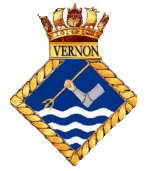
"Vernon
Semper Viret"
(Newer HMS Vernon Ship's Badge)
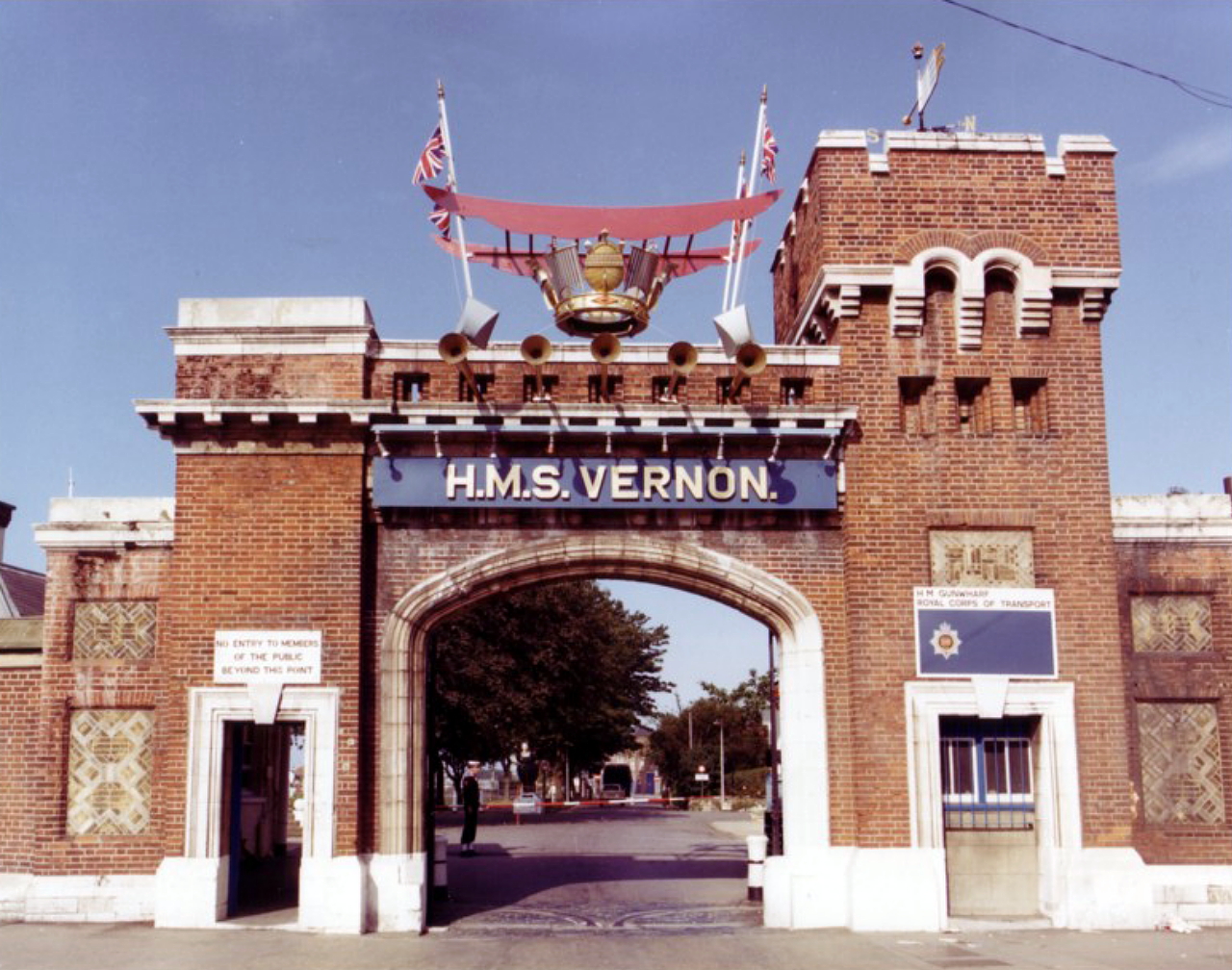
HMS Vernon's main gate decorated for the Queen's Silver Jubilee in 1977
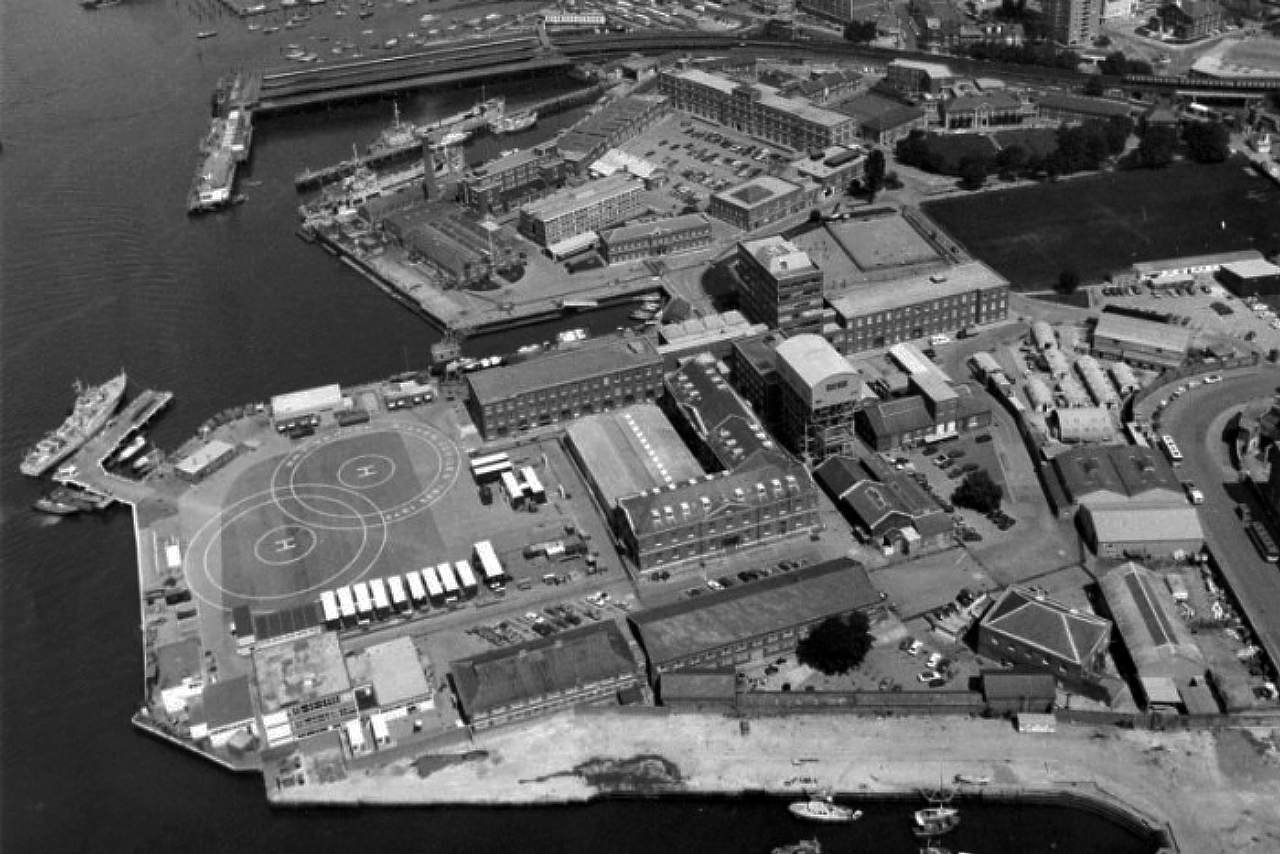
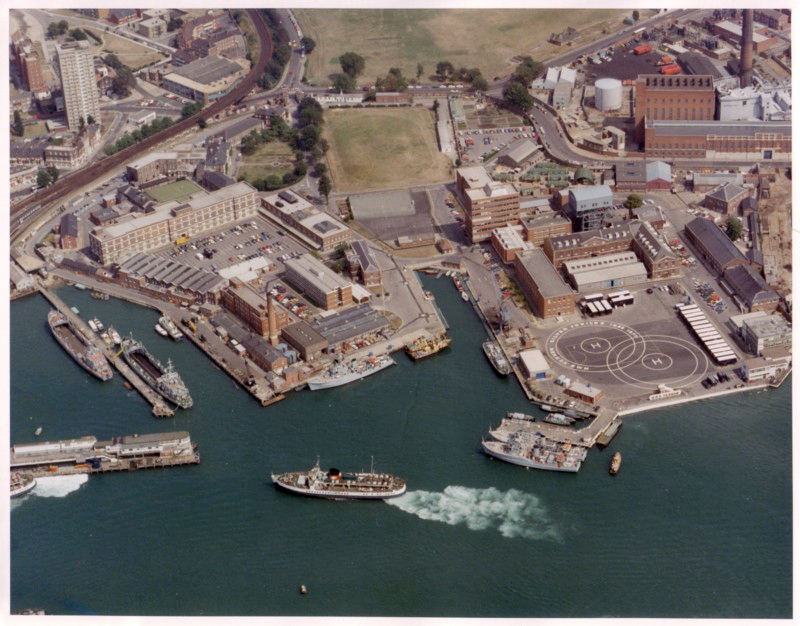
Aerial view of HMS Vernon in October 1981
In 1972, Instructor Lieutenant Syd Dicker ACP FRSA FRGS RN, a member of staff, produced a booklet to mark HMS Vernon's Centenary:
HMS Vernon Centenary (1872 - 1972) - A Short History of the Establishment
Training in Diving, Demolitions and Minewarfare, along with Naval Control of Shipping and, for a time, Seamanship, continued on the site of HMS Vernon at Portsmouth even after it ceased to be an independent command on 31 March 1986 and was renamed HMS Nelson (Vernon Site). In 1987, the establishment was renamed HMS Nelson (Gunwharf) and briefly became Headquarters for the Commandant General Royal Marines before his move to permanent accommodation at HMS Excellent on Whale Island. In November 1995, Minewarfare training was shifted to the School of Maritime Operations (SMOPS) HMS Dryad at nearby Southwick and subsequently to the Minewarfare Operational Training Centre at the Maritime Warfare School in HMS Collingwood across the harbour from Portsmouth. Diving training, together with the Superintendent of Diving, the Fleet Diving Headquarters, the Fleet Clearance Diving Team and the Portsmouth Area Clearance Diving Team moved into new accommodation on Horsea Island in Portsmouth Harbour on 1 September 1995 and the old Vernon establishment closed its gates for the last time on 1 April 1996.
|
PICTURES FROM VERNON's PAST |
|||
|
|
|
|
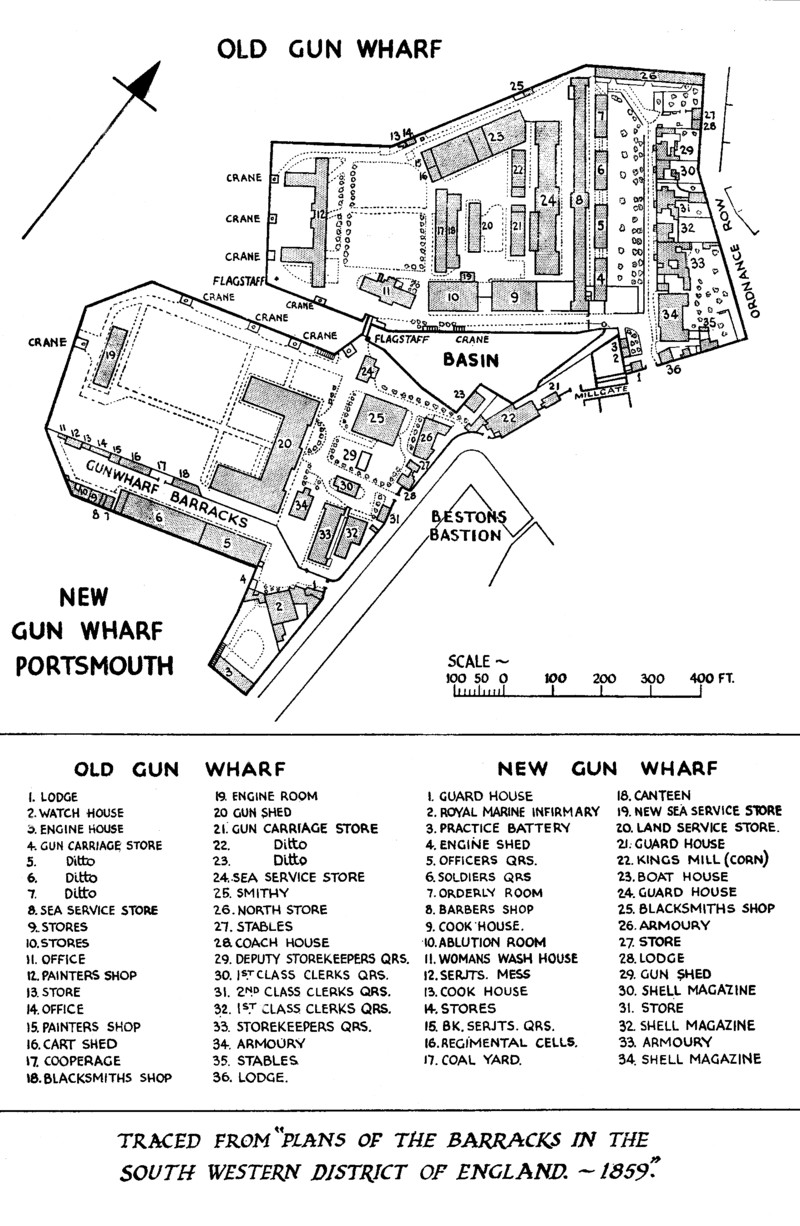
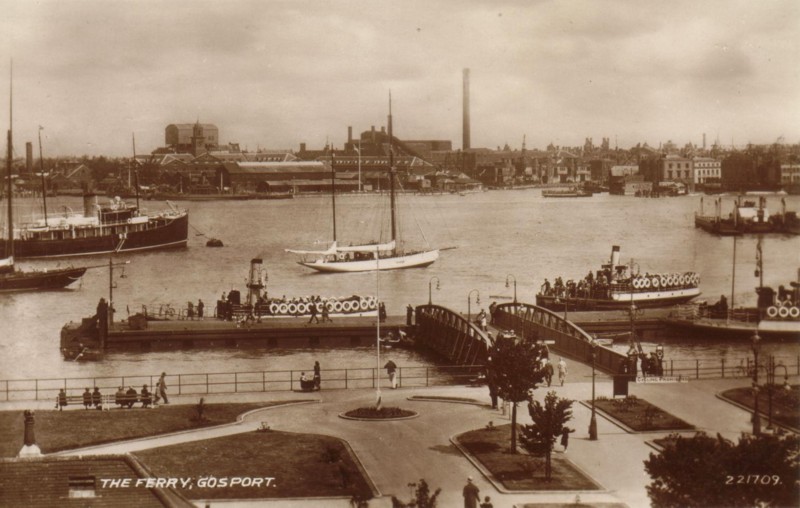
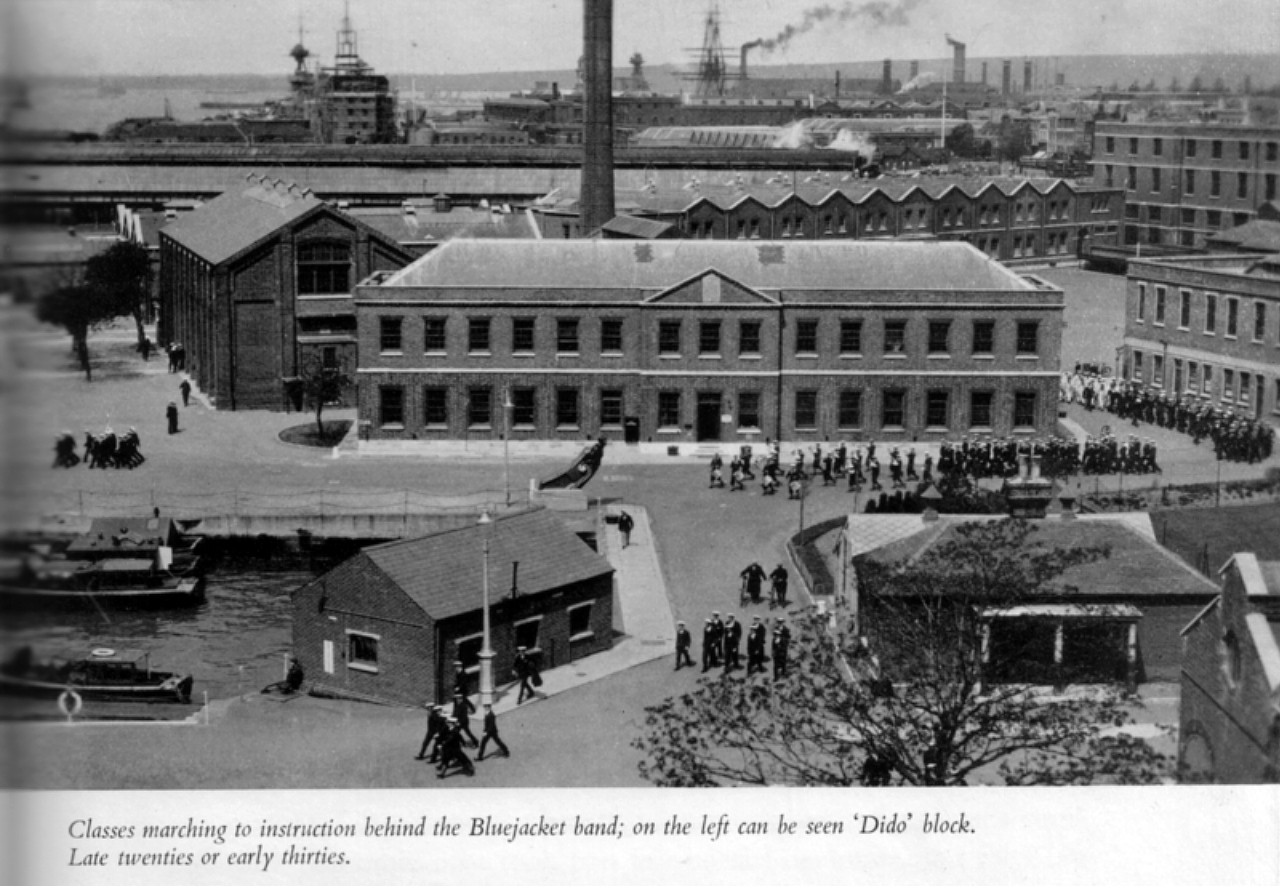
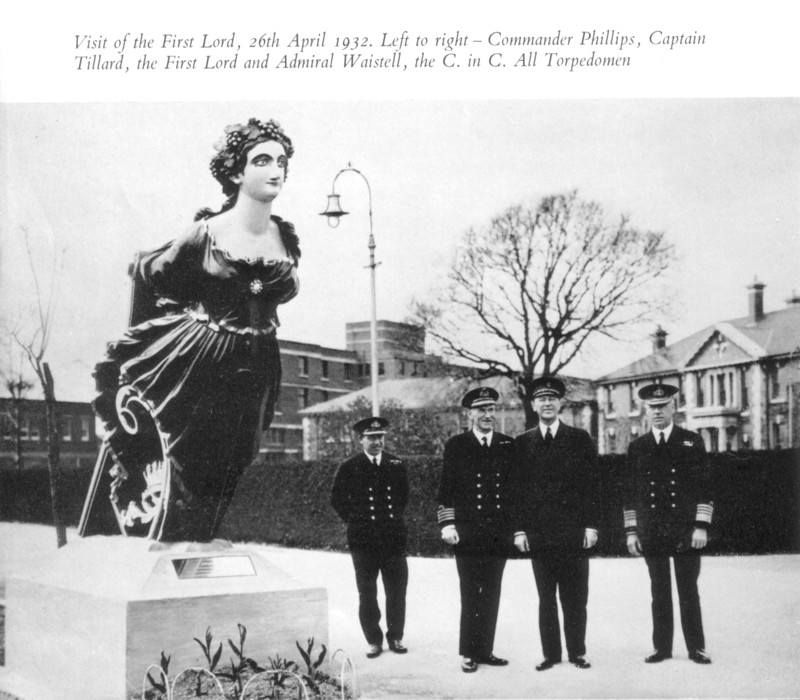
| 1859 - Plan of Gunwharf | Post 1919 - Gunwharf from Gosport side of Portsmouth harbour | Late 1920s - HMS Vernon | 1932 - Visit by First Lord of Admiralty |
|
|
|
|
|
|
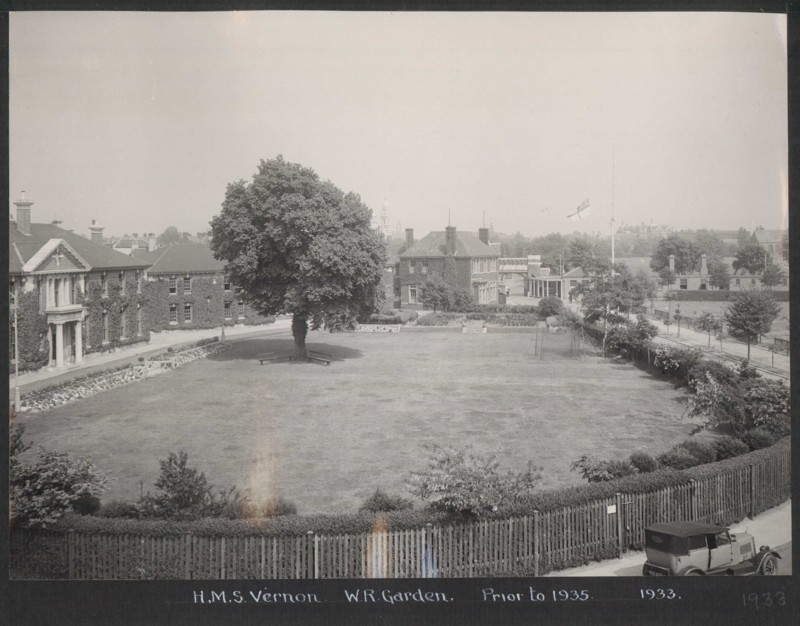
1933 - Vernon Wardroom garden |
Early 1930s - Vulcan Building & Mining Trials Tank |
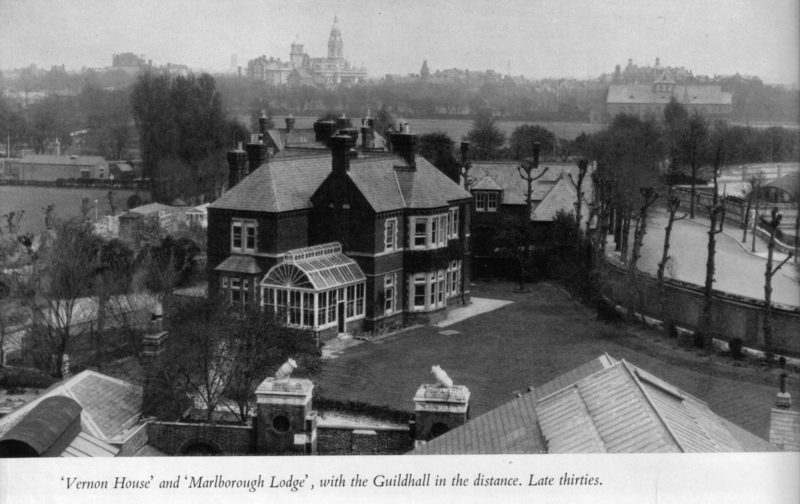
Late 1930s - Vernon House (pre-Blitz Captain's house) |
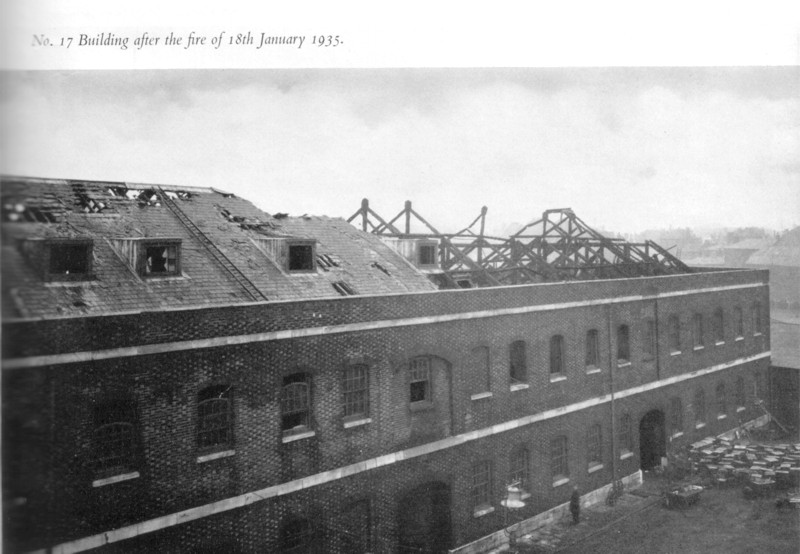
1935 - No 17 Building post fire |
|
|
|
|
|
|
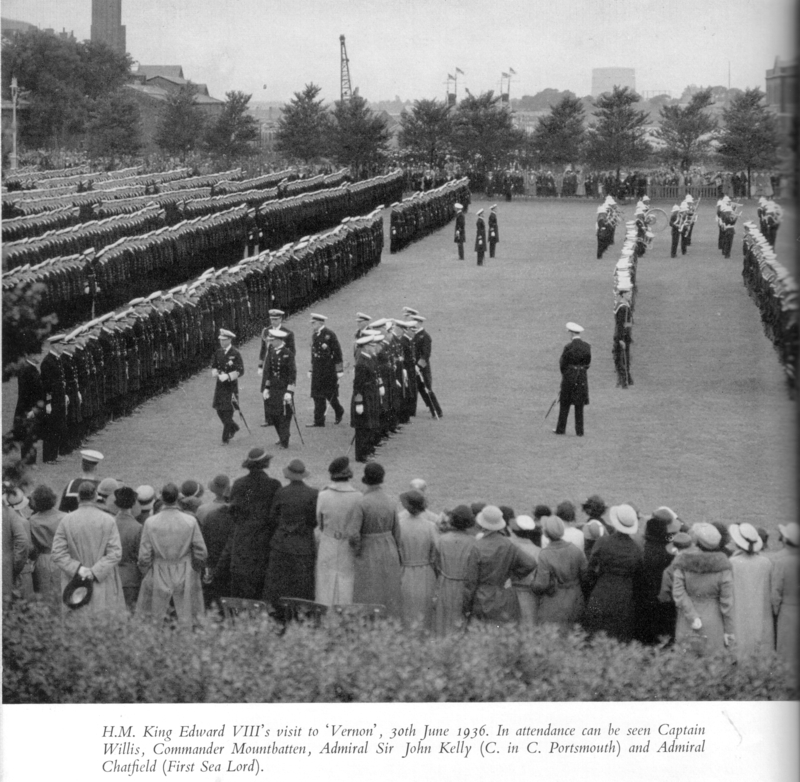
Jun 1936 - King Edward VIII's visit |
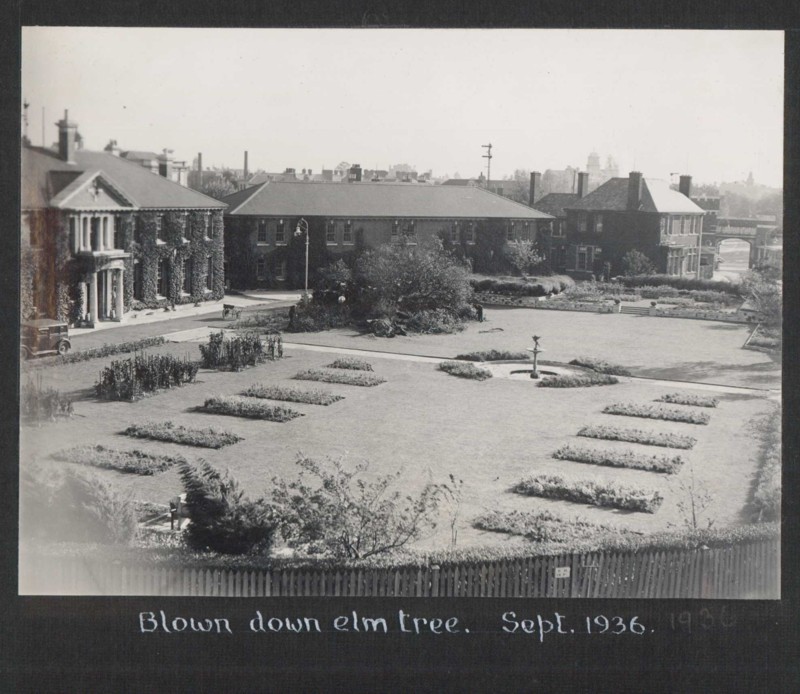
Sep 1936 - Wardroom Garden. Note blown-over elm tree which was hollow and flooded the roadway with water. |
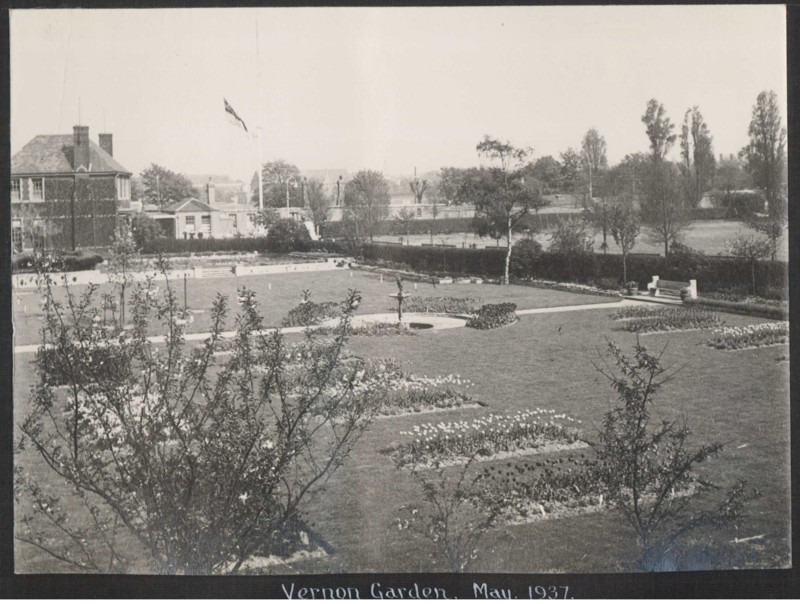
May 1937 - Wardroom Garden |
Summer 1938 - Wardroom Garden as re-landscaped by Lt Philip Colomb RN |

|
|
|
|
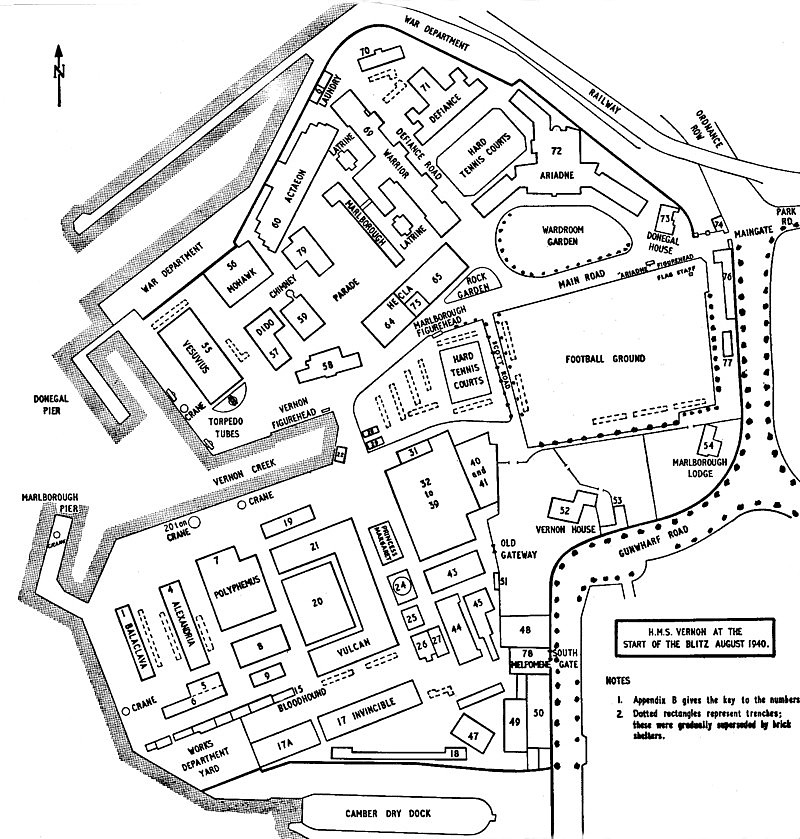
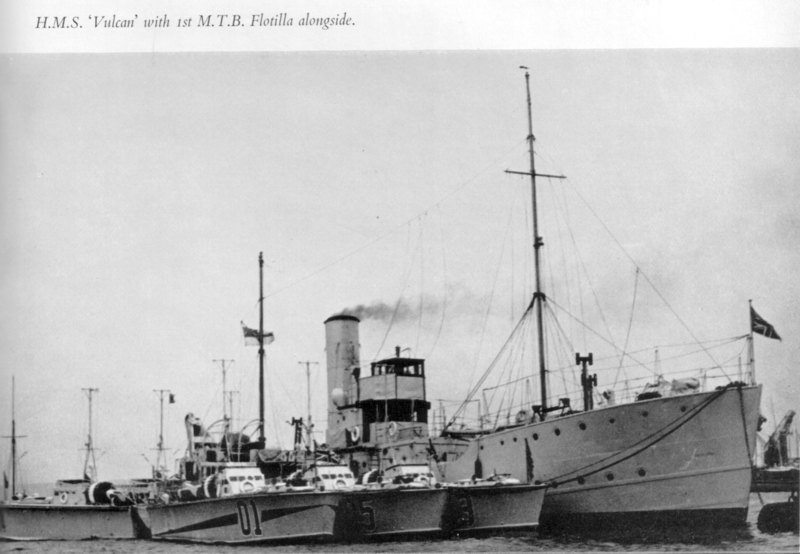
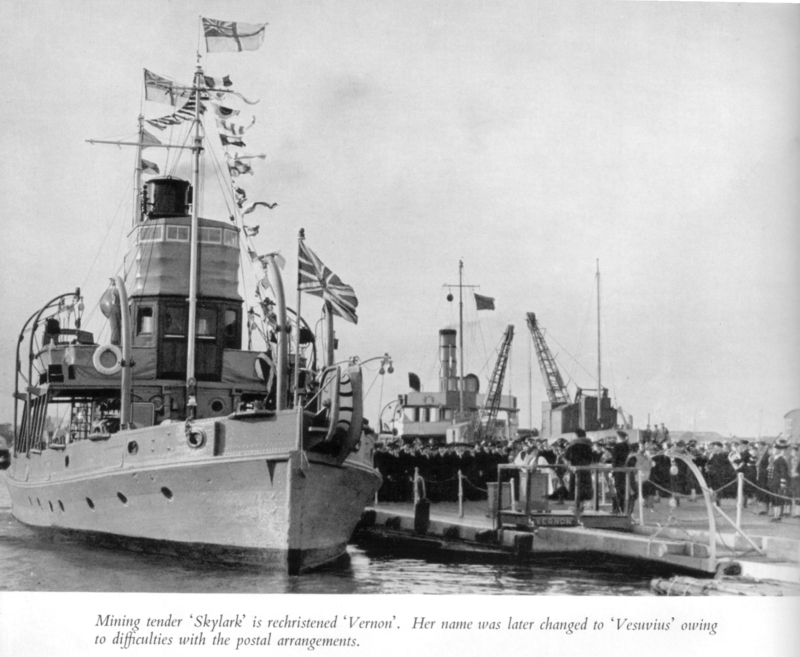
| 1938 - Digging trenches during Munich crisis | 1940 - Plan of HMS Vernon pre-Blitz Aug | HMS Vulcan & MTBs | Mining Tender Skylark re-named Vernon then Vesuvius |
|
|
|
|
|
|
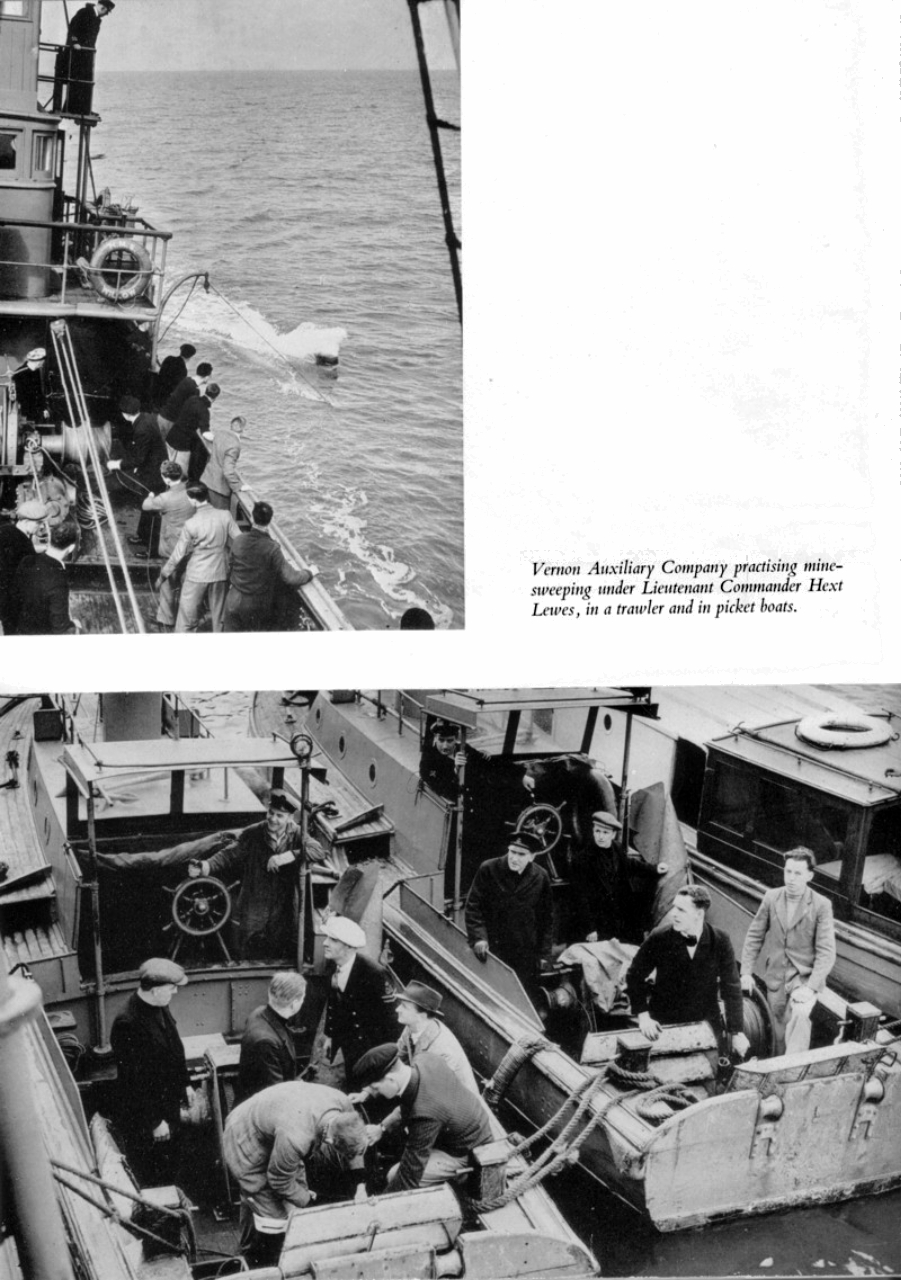
Vernon Auxiliary Company minesweeping |
Sep 1939 - Visit by Churchill |
Nov 1939 - Ouvry's Mine |
Dec 1939 - Decorations by King George VI |
|
|

|
|
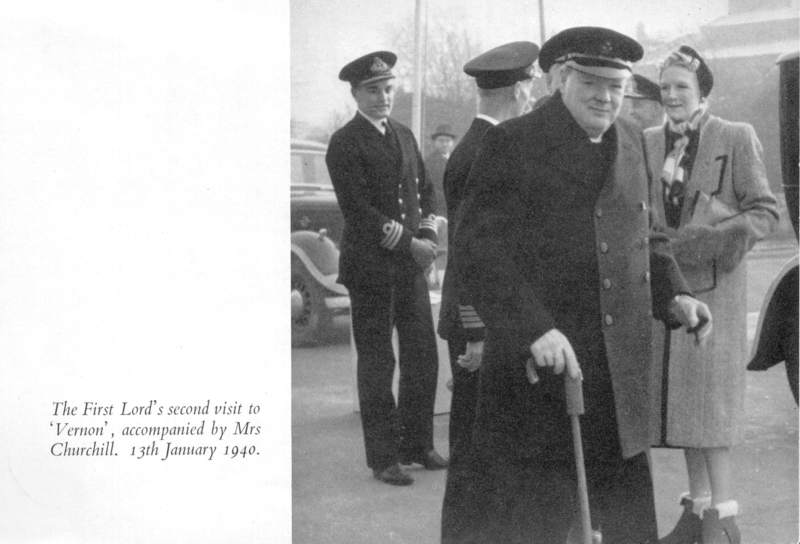
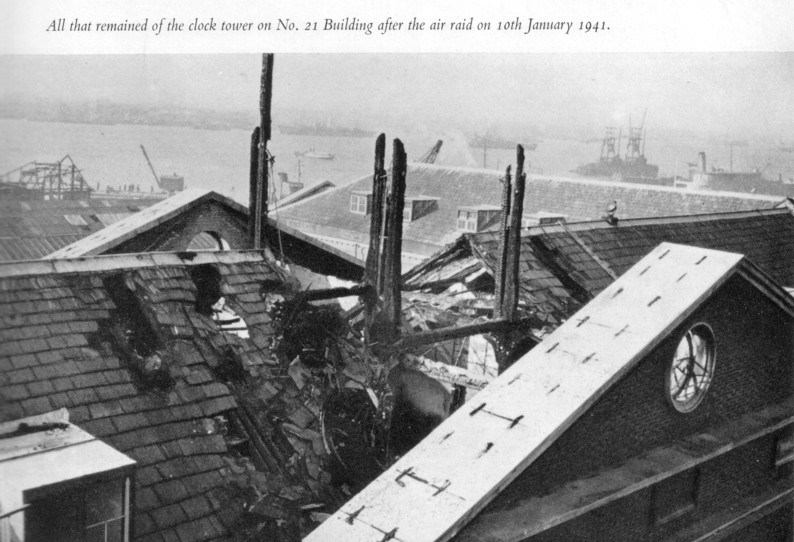
| Dec 1939 - King George VI inspects Ouvry's mine | Jan 1940 - Second visit by Churchill | Aug 1940 - First bomb in Vernon | Jan 1941 - Bomb damage to Vulcan Clock Tower |
|
|
|
|
|
|
Jan 1941 - Bomb damage to 17 Bldg & Wardroom Garden |
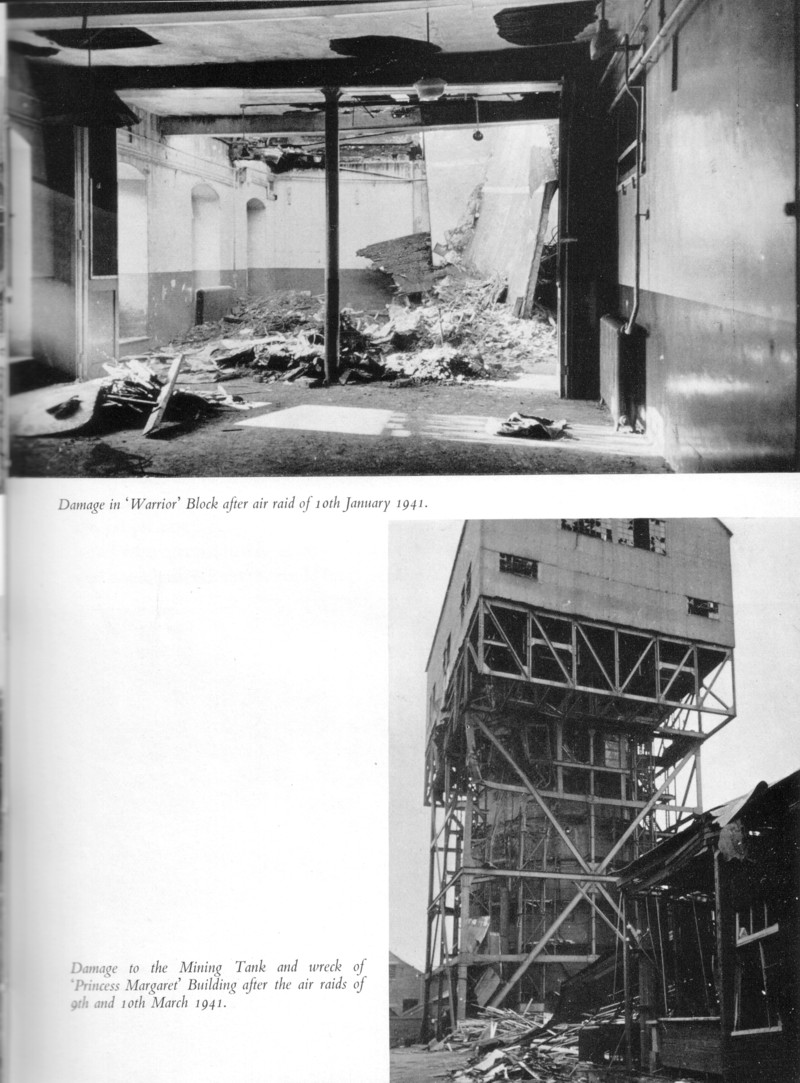
Jan/Mar 1941 - Bomb damage to Warrior & Mining Trials Tank |
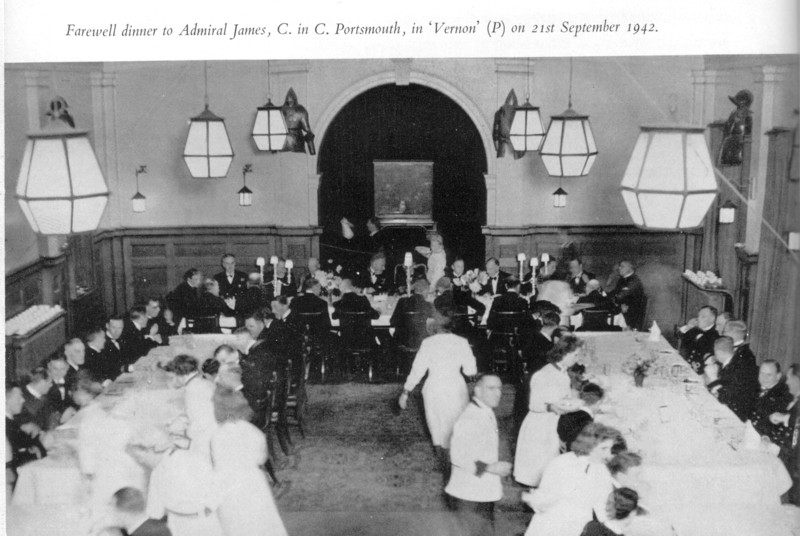
Sep 1942 - Farewell dinner for CinC Portsmouth |
Rendering Mines Safe |
|
|
|
|
|
|
HMS 'Mirtle' Mine Investigation Range |
Roedean School - HMS Vernon(R) |
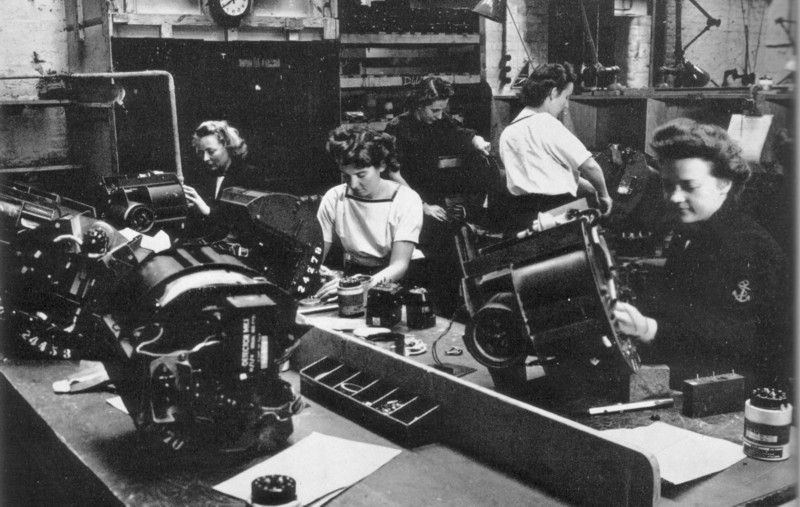
MX Wrens assembling 'special' mines |
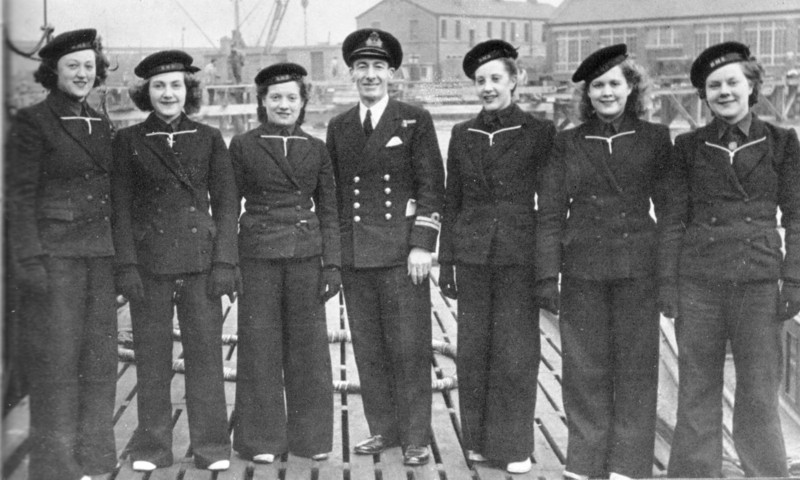
Boat Wrens line up by Creek |
|
|
|
|
|
|
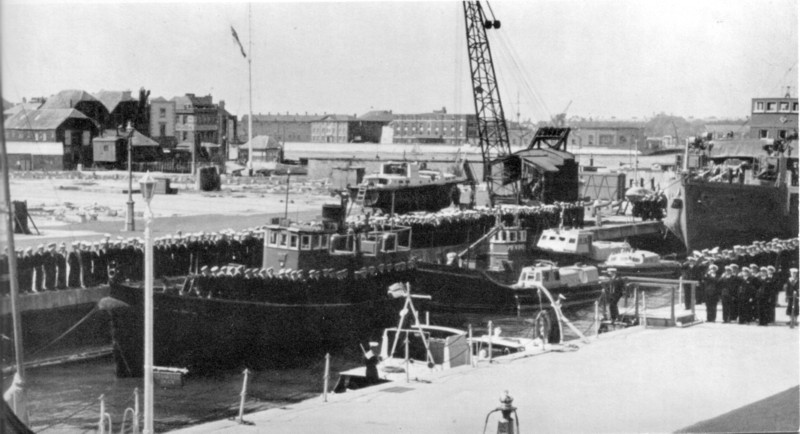
Nov 1944 - Visit by King George VI |
May 1948 - Farewell to Capt Hughes-Hallett |
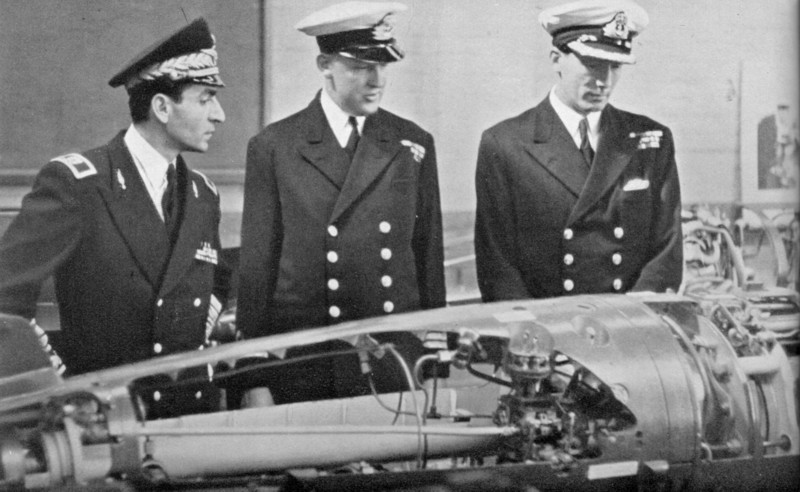
Aug 1948 - Visit by Shah of Persia |
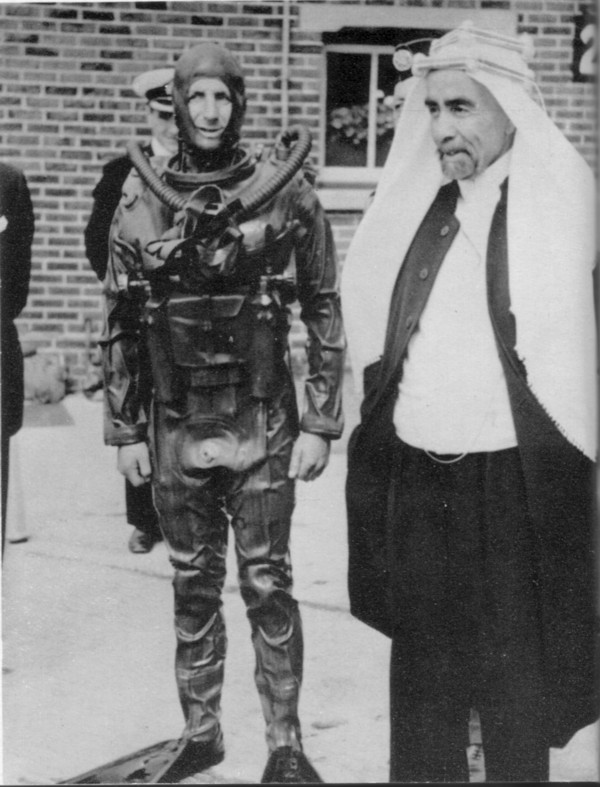
Aug 1949 - Visit by King Abdullah of Jordan |
|
|
|
|
|
|
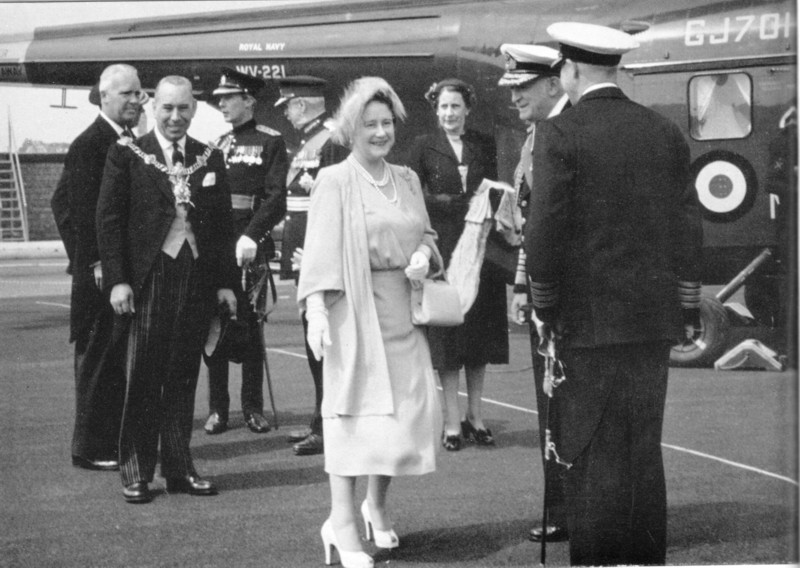
Jun 1955 - Visit by HM Queen Mother |
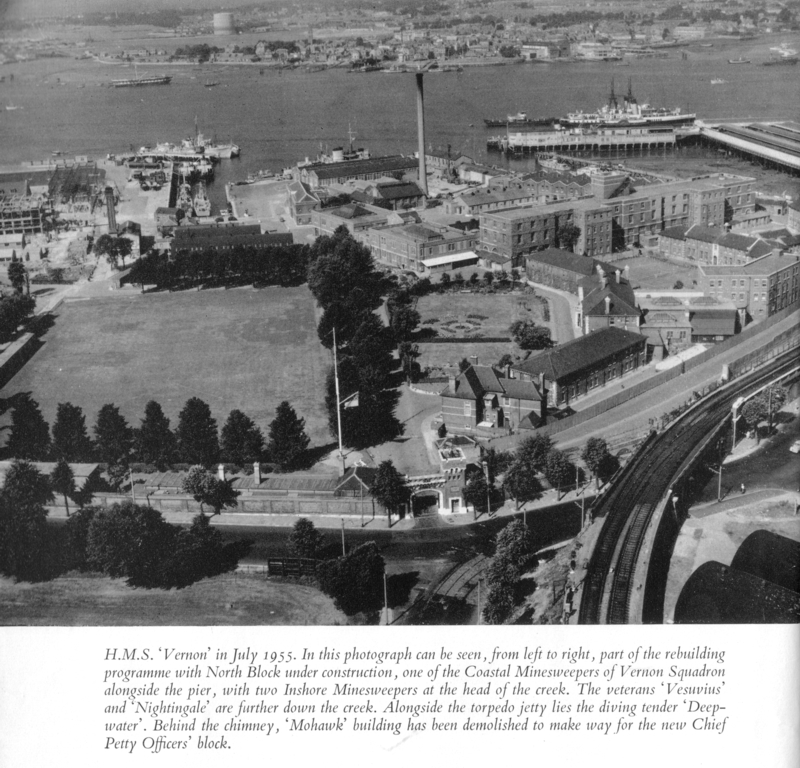
1955 - Aerial View of HMS Vernon |
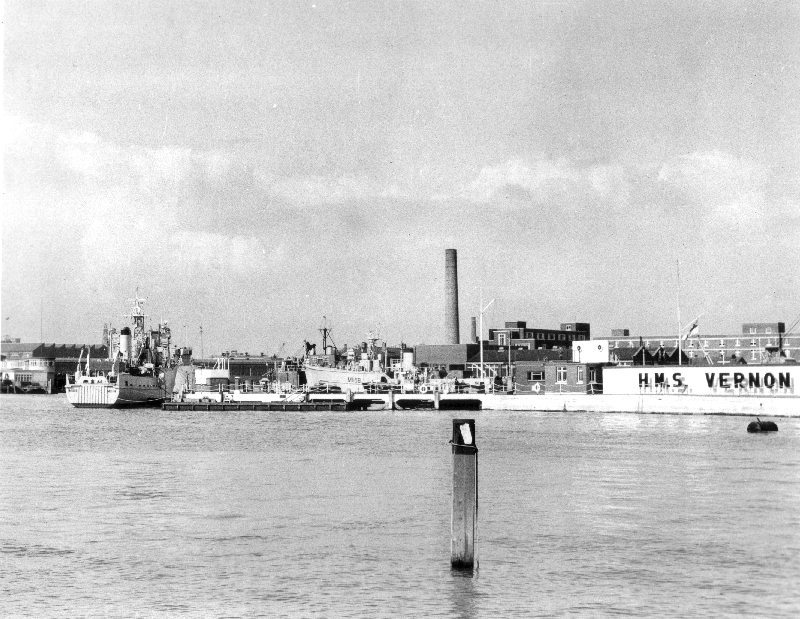
1960 ish - Vernon waterfront |
1974 - Vernon Creek |
|
|
|

|
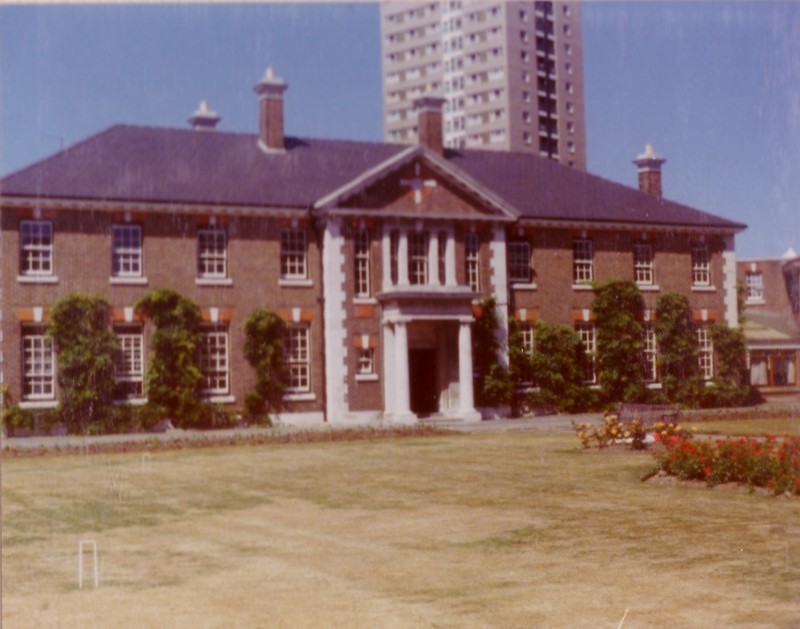 |
| Figurehead of HMS Ariadne | Figurehead of HMS Marlborough | 1975 - Barlow saves HM Queen Mother (but not her handbag) | 1976 - Wardroom |
|
|
|
|
|
|
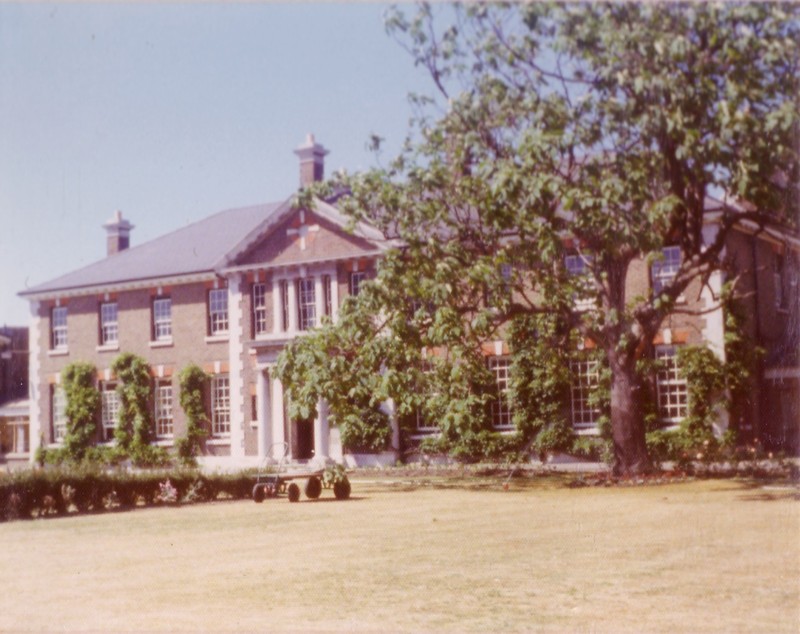
1976 - Wardroom |
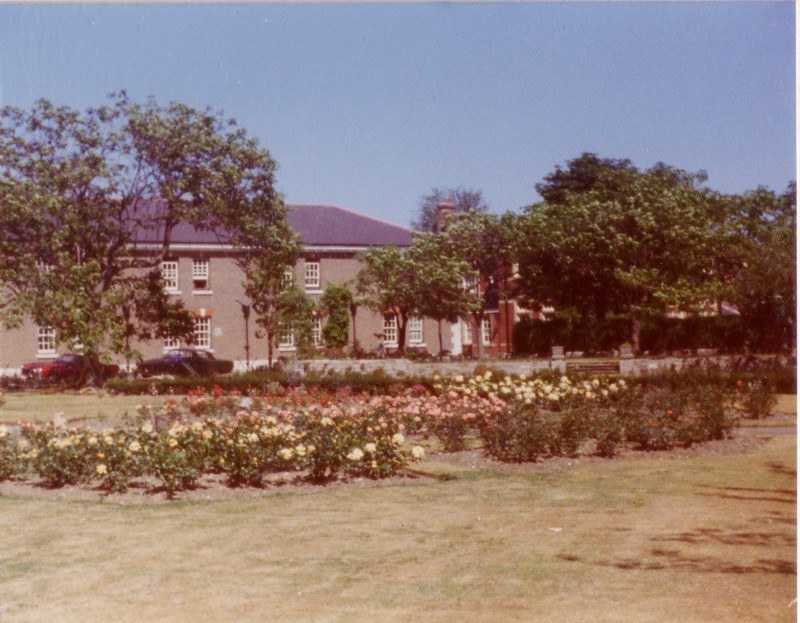
1976 - Wardroom Garden |
1976 - Wardroom Garden |
1977 - Main Gate decorated for Silver Jubilee |
|
|
|
|
|
|
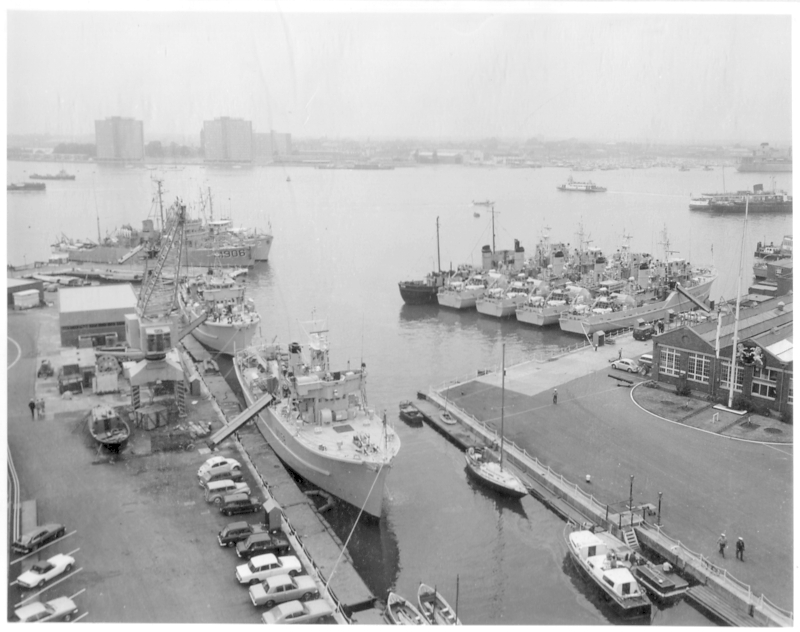
1977 - Aerial View of HMS Vernon. N.B. Ton Class MCMVs alongside plus two Royal Corps of Transport LCTs (Landing Craft (Tank)) |
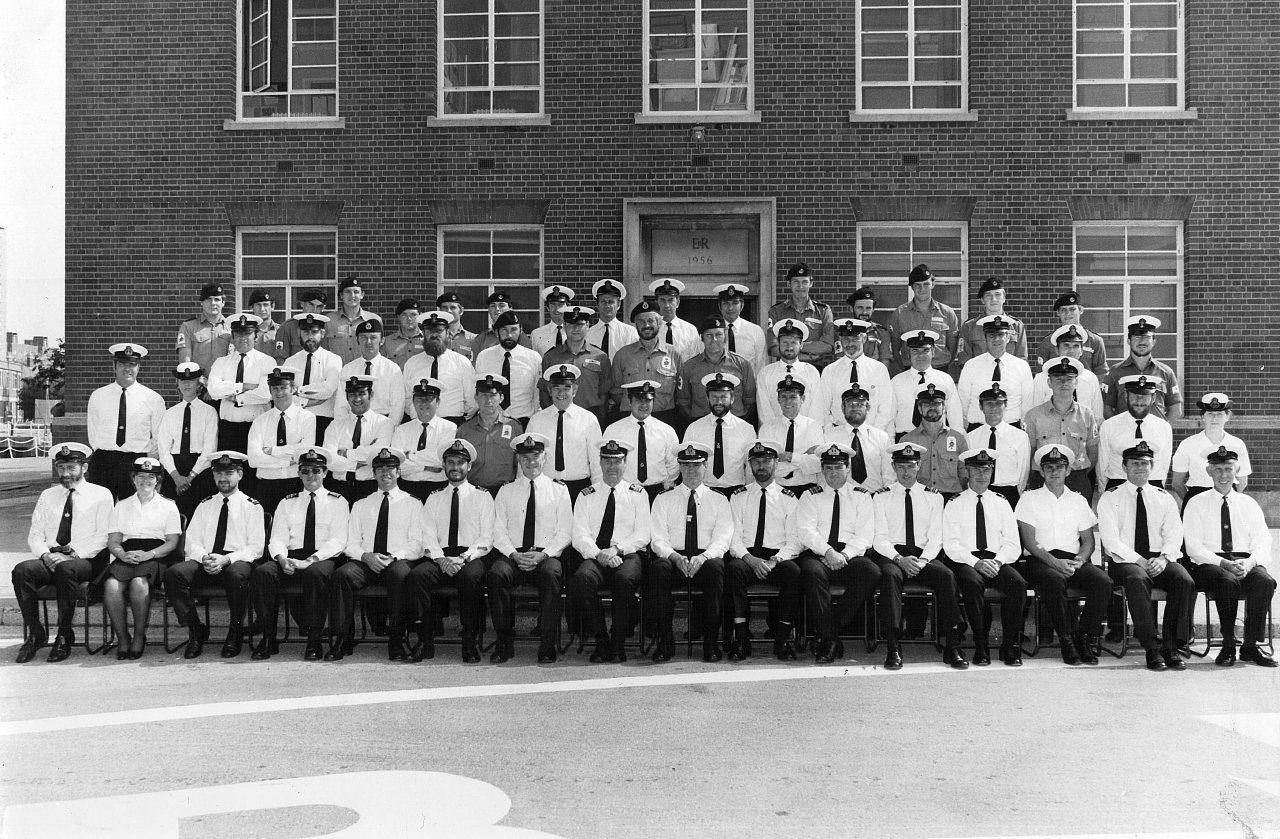
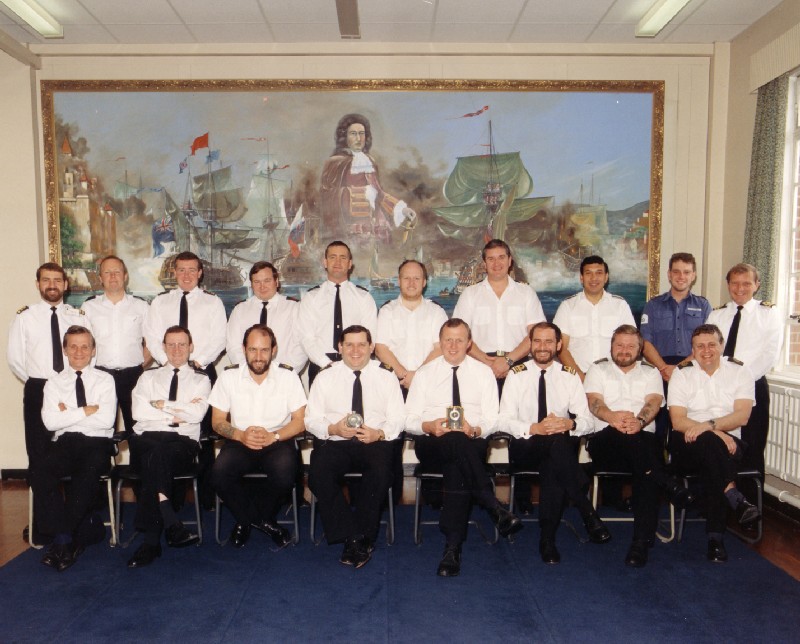
1983 - HMS Vernon Training Department Staff (Rankin, Kennedy RAN, Critchley, Hoole, D Nicholson, Paul, Sandiford, Cairns, Ellis, Harvey) |
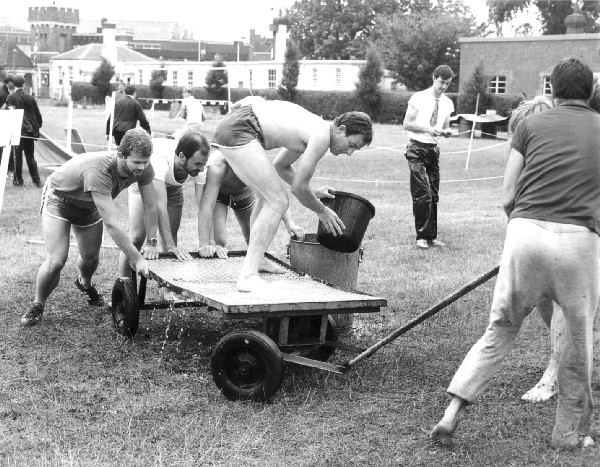
1983 - Vernon Volunteer Fire-fighting Team (Harvey, Hoole & Kennedy RAN) |
|
|
|
|
|
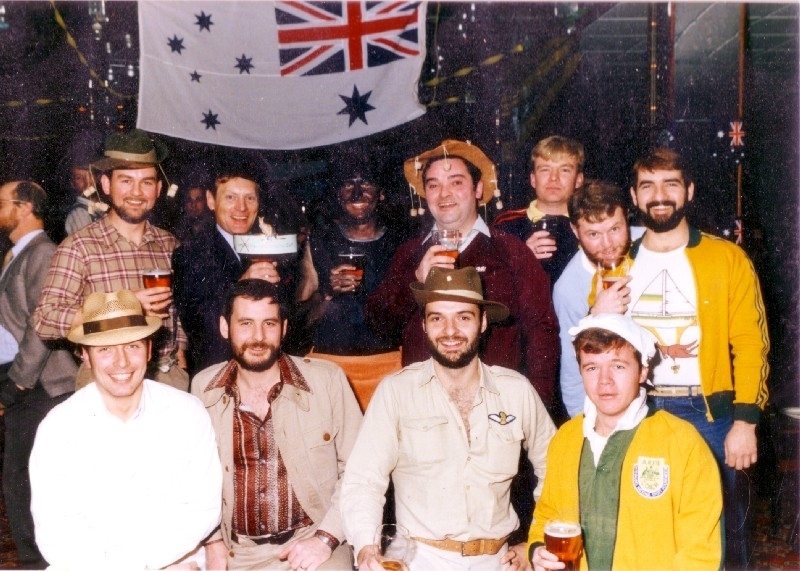
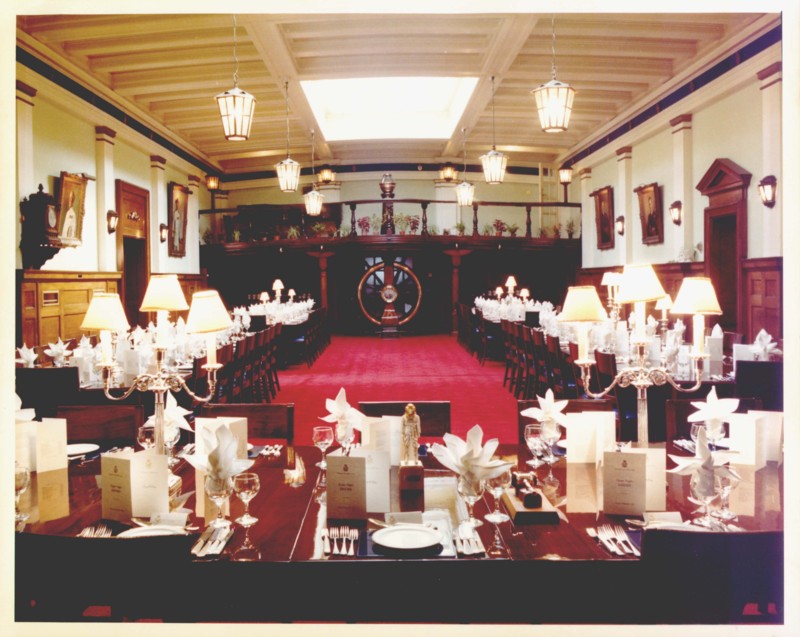
| 1984 - Australia Day in Vernon Club (Back: Rankin RN (later RAN), Burroughs RAN, Kennedy RAN, Unknown, Sewell RAN, Day RAN, Davey RAN (later RN). Front: Turner RN (later RNZN), Hoole RN, Davies RN, Griffith RAN) | 1985 - Wardroom laid for the Last Supper before the shift from Ariadne to Actaeon Block | 1990 - Minewarfare Section (Davey (ex- RAN), Dodd, Carey, Silva (later RAN), Turnbull, Hoole) | |
|
|
|
|
|
|
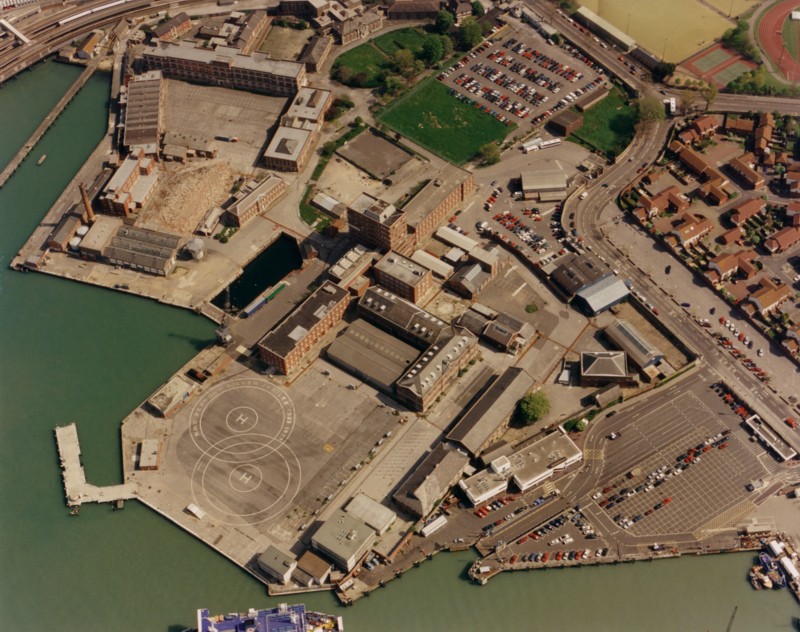
1998 - Aerial View after demolition of Scott Block & Mining Trials Tank |
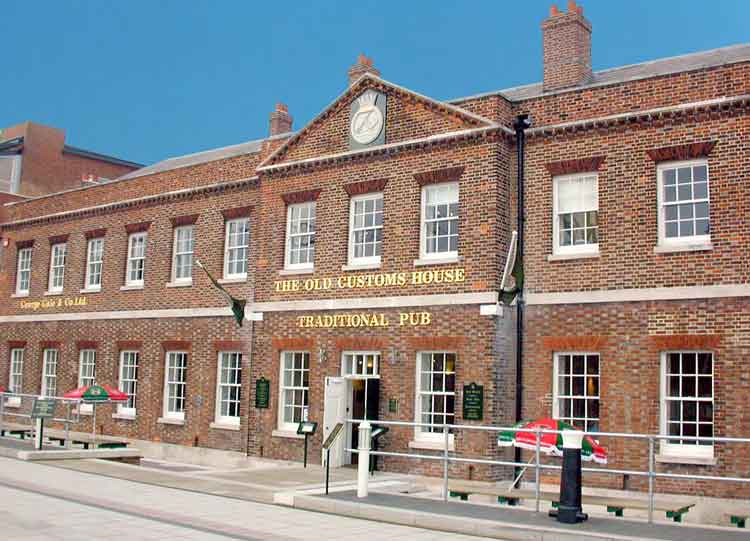
2003 - Admin Building as converted into 'The Old Customs House' pub |
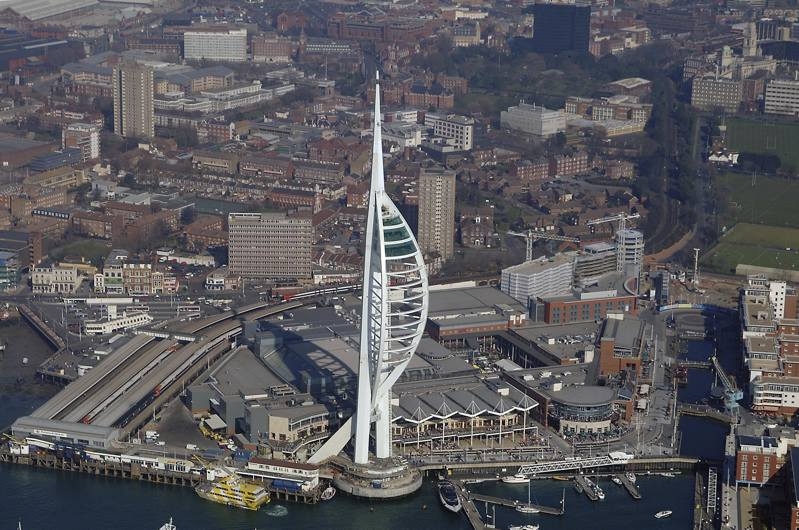
2005 - Transformation into Gunwharf Quays almost complete.
Surviving landmarks include the Admin Building, the crane by Vernon Creek, Vulcan Building and
the Infirmary. |
|